Showing posts with label Food. Show all posts

Tuesday, April 7, 2015

I'll Take the Local: Why Supporting Small Farms Helps Us All

The state of California is in the midst of a terrible drought. Even in a good year, California weather is weird to me as an east coaster. It never rains in the summer. Californians are entirely dependent on winter rain to fill their reservoirs, and this past winter was a very dry one. Governor Jerry Brown has implemented a mandatory water reduction strategy--for the first time ever in the state's history.

Californians are taking short showers, but what does that mean for the rest of us? Higher food prices, apparently. We get an absolutely ridiculous amount of food from California. Something like 80% of the tomatoes Americans eat come from this one state. Yes, the one that's WAY over there. Granted, it's a big state, but still. It's FAR from where I live. I could fly to Reykjavik in less time than it takes me to get to California.

Something's Fishy

It strikes me as insane how much of our food comes from really far away. I recently heard on NPR that the US exports something like 90% of the fish we catch, and we import 80% of the fish we eat. Or maybe it's the reverse--90% import/80% export. I can't remember. Either way, it's INSANE.

And while we're talking crazy, get this: much of the cod fish in local markets is from ICELAND.

WHY???? I live an hour away from a place called CAPE COD. A friend of mine, a Boston local who is one of five children, told me they ate tons of cod when she was growing up because it was local and thus, cheap. Apparently this is no longer the case. We've decided, fuel shortages and all, that we should send our cod to heaven-knows-where and instead ship in cod from a small country 2,500 miles away. At least it's closer than California.

And so, like any good modern American, I shall shake my fist and demand to know,

WHO IS RESPONSIBLE?!

Earl Butz, that's who.
www.laprogressive.com

Butz was Secretary of Agriculture under President Nixon. His task was to lower food prices, which had been rising in recent years. Butz responded with a series of initiatives that favored large farms and punished the small ones. He is famous for telling farmers, 'Get big, or get out.'

The result of these policies was the closure of hundreds (thousands?) of small family farms. We started importing our food from ridiculously far away places. Like California. And Iceland.

About 20 years ago, I visited a college friend at her home in rural Vermont. As we drove around, she pointed out dozens of small dairy farms that had closed. Vermont was once known for it's dairy farms, now it's more famous for leaf-peeping. Butz's policies were devastating for rural agricultural communities that didn't hop onto his 'get big' bandwagon.

The problem with consolidating our food supply as we have is that we are basically up a (dry) creek without a paddle when something like a drought occurs. If we don't nurture our small, local farms, could we end up with something like an Irish potato famine?? Maybe. And good grief, all the fuel we use to ship these tomatoes and cod fish to and fro... it's so inefficient.

Of course, I am not insensitive to the fact that I live in a cold, densely populated area with a relatively short growing season. Late winter and early spring would be pretty lean months if we relied solely on local foods. But if we support our farms, ranches and fishermen, our resources would undoubtedly be more robust. It might still be sparse by March, but by then, the maple sap is flowing freely so we could at least slurp on syrup for a while. Yay!

Local food is fresher and so much yummier than far-away fare. The produce we get from our wonderful CSA, Picadilly Farm in New Hampshire, stays fresh SO MUCH LONGER than anything I buy from the supermarket.

Wow, I'm REALLY getting a lot of use out of the caps lock button today, but buying local just makes sense. We can leave the Icelanders with their cod, and maybe next winter arrange a snow-for-tomatoes exchange with California??

************************

You can find local foods at farmer's markets and some supermarkets, but the best place is directly from the farms. Check out www.eatwild.com  and www.localharvest.org for a list of local farms in your area.

Saturday, March 28, 2015

All About GMOs

A few months ago, Jimmy Kimmel's people quizzed pedestrians in LA on the subject of gluten, footage of which made for a great intro to this post on gluten. Now, he's tackled another health topic in the same way. This time, farmer's market shoppers were asked about GMOs.

Watch this:


Dude! Those GMOs are giving up not-so-good vibrations.

A couple of weeks ago, I attended a presentation at Boston's Museum of Science on GMOs. I found it to be very fair and evidence-based, and it's a topic on which I have been reading for some time. Here's what I've learned (and of course, my spicy opinions thereon.)

What are GMOs?

GMO stands for genetically-modified organisms. This refers to foods that have been altered using genetic engineering techniques. Basically, they splice bits of DNA strands into the DNA strands of something else. Sometimes they'll use DNA from the same type of plant (as with wheat), other times they'll use other species entirely.

Scientists tinker with genes for a variety of reasons. Some genetic engineering efforts are meant to make plants more resistant to pests. Others are meant to 'improve' the nutrient quality or simply appeal to buyers' preferences.

For example, I recently read about a scientist who is trying to modify tomatoes to make them richer in folic acid, a nutrient shown to prevent birth defects. Pregnant women are now advised to supplement their diets with folic acid, and this new-fangled tomato would undoubtedly find it's way into tomato sauces for pizzas and other processed tomato foods. And since people eat a lot of pizza, the theory is this will aid in preventing birth defects.

I heard of another effort to create peach flesh that would pull away easily from the pit. I'll admit I do find it very satisfying when my peach willingly parts with it's pit... I don't know that I need a team of researchers to finagle this for me, but well... I'll save that for my rant.

Should you avoid genetically-modified foods?

[inhaling deeply] Ok... there have been studies done on the safety and nutrient content of genetically-modified foods which indicate they are safe and as nutritious as the natural kind. However, it should be noted that these studies are usually funded by the companies that develop, sell and profit from GMOs. It is difficult to find independently-funded studies on GMOs.

How do you know a food has been genetically-modified?

Here's the sticky wicket--you don't. Food companies are not required to include this information on the label, so they don't. But something like 90% of corn, soy and canola grown in the United States are genetically modified. These crops are used in some form in almost all the processed foods sold in supermarkets, and they are used to feed livestock, even though some of those animals are not meant to be eating those foods in the first place. (Think cows -- they're supposed to be eating grass, not corn.)

Generally, unless a label specifically indicates that it does not contain genetically-modified ingredients, you should assume it does. Of course, this doesn't help you if you are buying food that doesn't come with a label, but I have also read that produce SKUs that start with '8' indicate a food has been genetically modified or irradiated. The USDA Organic label prohibits genetic modification, so buying certified organic should be GMO-free.

There is a movement afoot to require GM foods to be labeled as such, and it is being fought tooth and nail by the industry. They say it will unfairly bias consumers against their products. There is one very large company that is at the forefront on genetic engineering research. This company does not hesitate to bring legal action against anyone who threatens their business. They've sued small farmers as well as municipalities that have voted to require GMO labeling. They also produce fertilizers and pesticides. I don't want to mention them by name because I'm afraid they might sue me. But their name starts with an 'M' and rhymes with 'ronranto.'

I first heard about GMOs when I was living in Scotland back in the late 1990's. There a Hungarian-born scientist by the name of Arpad Pusztai was conducting experiments with genetically modified potatoes. Pusztai caused an uproar when he revealed in a television interview that the rats fed GM potatoes demonstrated stunted growth and supressed immune systems, and he highlighted the need for further testing.

Image: www.news.bbc.co.uk
Pusztai was summarily silenced, fired and essentially black-balled from his profession. Since then, numerous suits have been brought against pretty much anyone who threatens their interests.

And this is what really chaps my hide about GMOs. If they are so wonderful and so safe and so nutritious, why wouldn't you want to label them as such? 

I mean, really, people?? If the tomato sauce on this otherwise crappy tasting frozen pizza could save millions of babies from developing spina bifida, wouldn't we want to brag about it? When's the last time any American industry said, 'wow, let's NOT tell the people how awesome we are?'

Never. That's never happened. So if GMOs are the best thing since sliced bread made from semi-dwarf wheat, why be all hush-hush about it?

And that, dear readers, is why I smell a rat when it comes to GMOs. Why all the secrecy, the bullying? The lawsuits? Why doesn't Ronranto-with-an-M and others divert some funds from their legal departments over to PR? Why not invest in educating the public on how wonderful it is to play with DNA instead of tormenting anyone who dares cross them?

Completely avoiding GMOs is nearly impossible, but we try to limit our exposure. Our wonderful CSA produce is organic, and we buy very few processed foods. Until this industry responds to concerns with something more than legal bullying, they can expect a suspicious consumer, labeling or not.

Sunday, November 30, 2014

Eat the Skin! The Glories of Peau de Poulet

Last week I wrote about liver, how wonderful it is for us and a few ways to enjoy this nasty-tasting-but-whoa-so-good-for-you food. Well, my Darling smoked a turkey for Thanksgiving. This bird mercifully came with all it's innards intact, and last night I ground up it's heart and liver along with some grass-fed ground beef and fashioned it into chili! So yummy and no one tasted any yucky liver flavor! It's neck and some bones are currently in the slow cooker for broth, along with divine gelatinous bits that were at the bottom of the drippings pan.

This is called nose-to-tail eating, and it's they way to go, people. Use up every part of that animal! There is so much goodness in the other creature bits. Somehow we've gotten away from eating the whole bird (or pig, or cow, etc.) and it's a shame, because there is a lot of goodness to be had, not to mention the simple efficiency of it all. Especially when you're buying pastured animals (read: expensive), you don't want anything to go to waste.

Well, now that I've thoroughly grossed some of you out, I'm going to talk to you about chicken skin.
Bone-in, skin-on thighs--YUM!

Yay! Chicken skin!

You may find liver kinda nasty, but just about everyone loves a good bite of crispy skin. Sadly, however, skin is one of those foods that was put on the 'no' list during the dark, withering years of fat-phobia. It's a bit of a head-scratcher, though, because really--chicken skin doesn't even contain all that much saturated fat, which we have been erroneously taught to fear. Saturated fat is a post for another time, but even if you're very calorie conscious, eating the skin only adds about fifty calories.

A lot of people are jumping on the chicken skin bandwagon. When I started researching why we should eat the skin, I found a number of mainstream media outlets touting the 'go ahead and eat the skin' message. The reasons given were typically what I mentioned above--it's really not that bad for you, and it's yummy, so go ahead and enjoy a 'guilt-free indulgence.'

But I'm going to tell you more--not only is it 'not bad for you,' it's also GOOD for you! 

Chicken skin contains glycine, an amino acid that performs a host of functions in your body. Glycine plays a role in healthy metabolism, muscle development, sleep... wow, lots of stuff. In fact, I first learned about glycine and chicken skin in my never-ending sleep research. It's called a 'non-essential amino acid,' which means our bodies can manufacture it on their own, which is a good thing, because we'd be basically screwed without it.

Eating glycine-containing foods is a good idea. Other rich sources include bone broth and gelatin. Interestingly, muscle meats are high in another amino acid called methionine, which can deplete glycine, so that's another good reason to eat the skin.

The One 'Con'

The only caution I'd mention about skin is don't eat it every day. I learned it is quite high in omega-6 fatty acids. Omega-6's are good for us, but they must be balanced by omega-3s, and most of us in the west get plenty of omega-6 and not enough omega-3. So maybe have some nice, wild salmon the day after eating your chicken skin.

And it's just yummy. Oh my, good, crispy chicken skin is so incredibly yummy. The best recipe I can recommend is Michelle Tam's Cracklin' Chicken, which you can find here. I will warn you that it is incredibly messy--you need a splatter screen. Or just wait until your kitchen is filthy and needs a good cleaning anyway. You will weep bitter tears if you have just scrubbed your stove top--mark my words.

The biggest fan of skin in our house is the Darling Son #1, who will troll around begging crispy skin off anyone who will listen. So if you still can't bring yourself to eat the skin, bring it on over. I have a very willing customer who will take it off your hands.

Saturday, November 1, 2014

All About Chocolate Cravings

Goodness, I'm such a chatty Cathy lately! Just posted last night and here I am again!

Well, I have a lot to say. I realized I need to update you on week 2 of the 21 Day Sugar Detox. Happily, it went much better than week one. That was *such* a crappy week. But week 2 has gone much better. I'm not even missing sugar.

Of course, then Halloween comes along. I'm looking at the kids' stash last night and really, most of it isn't even looking that good to me. Except the Reese's Peanut Butter Cups. Normally, I Mommy-tax the living daylights out of those. Darling Son #1 tasted his very first PB cup last night because typically, I eat them before he's even had a chance to try them. (I know. That's bad.)

Even so.... I, ah, might have fallen off the wagon and had one... or... maybe two.

Honestly, they weren't even that good. I don't know why I had the second one in light of this fact, but there you go. The funny thing about stuff like this is the memory of it is better than the actual item. When I was pregnant with Darling Son #2, sweets made me sick the whole 37 weeks 5 days. I'd look at sweets and think, I bet that's tasty. Then I'd eat it and realize it still wasn't. Funny how the mind works.

This brings me to Almond Butter Cups!
This is one of the not-sweet treats in the 21 Day Sugar Detox. You can find the recipe here.

The first time I bit in to one of these bad boys (good boys?) my taste buds freaked a little bit. I *thought* it was going to be sweet, but it wasn't. It was still strangely satisfying, though. I've made this recipe a few times over the past however-many-days (15? maybe?) The fats are mostly good saturated fats from coconut oil and butter from grass-fed cows. The amount of almond butter is fairly small, so  you're not getting a crazy-lot of polyunsaturated fats, which we talked about in week 1.

And yes, I called saturated fat 'good.' I'll write more about saturated fat another time, but for now I really want to talk about the cacao powder.

**********************

We've talked about chocolate before, and all the health benefits contained in good quality, dark chocolate. One I didn't mention is magnesium.

Magnesium is a mineral, and it's very important. Some 300 functions in the body are dependent on magnesium, and it turns out, many of us aren't getting enough of it. Poor mineral content in soil is part of the problem, but the main one is absorption--I read that we absorb only about 40-50% of the magnesium we consume.

According to Dr. Elson Haas, author of the book Staying Healthy with Nutrition, "To function optimally, magnesium must be balanced in the body with calcium, phosphorus, potassium, and sodium chloride." Vitamin D levels also affect magnesium, and since many people supplement with vitamin D and calcium, in particular, this can throw off the balance of these other minerals. This is a big part of the reason I try to get my nutrients from food, rather than isolated supplements.

There are other reasons we don't absorb magnesium--drinking soft water, alcohol, caffeine and general sugar consumption can affect how well we assimilate magnesium. Phosphoric acid found in diet sodas also hinders magnesium absorption. (Diet Coke is a 'sometimes' food!)

The recommended daily allowance for magnesium is between 300-400 milligrams, but many people who know more than I do suggest it should be much higher--closer to 700 milligrams per day. Happily, if you consume more than your body needs, it seems you just pee it out, so there's little worry about overdoing it.

I really became interested in magnesium a couple of weeks ago. I was wicked sore after my barre3 class, so I took an Epsom Salt bath. Epsom Salts are magnesium sulfate, and taking baths is one way to up magnesium intake through your skin. I noticed I slept really well that night, so I tried it again the following night and wow! Another great night. I don't know that a couple of Epsom Salt baths really did that much for my mag. levels, but it turns out insomnia can be related to magnesium deficiency. So I was taking hot Epsom Salt baths every night until my skin kind of revolted, so I'm looking into other things.

Anyhoo, what does this have to do with almond butter cups? Cocoa is rich in magnesium, which is why chocolate cravings might be an indication of magnesium deficiency. Of course, oatmeal is also rich in magnesium and I think I can safely say I've never craved oatmeal. The first time someone told me about the chocolate/magnesium craving thing, I figured she was just trying to make me feel better. "You're not a glutton! You're just need magnesium!" (Maybe it's a bit of both?)

Other good sources of magnesium include Brazil nuts (along with several other nuts and seeds), avocado and bananas. So I made a magnesium smoothie! Here's the recipe:

1 cup almond milk
1 tablespoon flaxseed meal
1/4 avocado
1 small banana, preferably frozen
1 tablespoon raw cacao powder*

*I've found raw cacao powder for the best price at TJMaxx, of all places. Locals: please don't go clean out the shelves on me, k?

Toss all ingredients in a blender and mix. You may want to thin it a bit or add ice cubes. Mine came out quite thick:

It was almost like ice cream! ('Almost' being the operative word.)

I have a few other tricks up my sleeve, so expect to hear more about magnesium. In the meantime, if you find yourself tempted to dip into the cheap Hershey-type chocolate in your kids' Halloween baskets, try the smoothie or some almond butter cups. Maybe you're deficient in magnesium! I can promise, the cheap chocolate isn't going to help you on that one.

Tuesday, September 23, 2014

Real Food: It's What's for Lunch

One day last year I forgot to pack a lunch for Darling Son #1. Did I mention it was his birthday? Oh yes. Mother of the Year!

The really sad thing is I didn't even notice I had forgotten. It wasn't until I picked him up at the end of the day, all aflutter to hear how his birthday at school went, that he blurted out, "It was great! You didn't give me a lunch so I got pizza and chocolate milk!"

Apparently they let you buy on credit if you don't have a lunch. So I paid $3 for the pizza and chocolate milk plus a $2 service fee and had to endure pleading for several months hence for a reprisal of the pizza and chocolate milk. From then on, I redoubled my efforts to a.) pack a tasty, healthy lunch and b.) not forget to send it to school.

The Not-so-skinny on School Lunches

School lunches are notoriously lamentable. The I Quit Sugar website recently rated American school lunches as 'the worst in the world.' Apparently things like tomato paste on pizza are classified as vegetables, along with french fries. The First Lady's efforts to improve things have just resulted in smaller portions, not better food.

Now, you know I'm not totally down on french fries or chocolate milk. I've blogged about both (chocolate milk here and fries here.) But these are sometimes foods. Certainly not something I want my kids eating everyday.

Not to mention the cost--$3 is alarmingly cheap, but still, the bill for two kids to eat pizza and chocolate milk everyday would run us close to $1000 over the course of the school year. I'm certain I can beat that with better quality, homemade food.

I also pack lunch and breakfast for the Darling Husband. So we have quite a packing operation here in the mornings. Here's how it goes:

Gather the Supplies

I spent this summer researching the vessels into which I would pour out my mother/wife love in food. Wow. There are a lot of options, but I became quite specific with my requirements. I needed:

  • Insulated bags for everyone.
  • Glass dishes for the DH, so he could heat things up in the office microwave.
  • Unbreakable containers and wide-mouth thermoses for keeping hot foods warm for the small people.
  • Some sort of alternative to the hundreds of plastic baggies I contributed to landfills last year. 
I read some bad things about plastic. Apparently plastic will kill us all, but I was unsatisfied with some of the other options, so I bought a variety of BPA-free plastic containers.

These Pyrex glass containers for DH:

And these stainless-steel thermoses for the small people:

One of my favorite purchases is this fabulous ice-pack bag!
I send DH's food in this everyday. It has ice-pack stuff IN the bag! Brilliant! He brings it home every evening, folds it up...
and pops it in the freezer.
Then we just fill it up in the morning. I'm in love with this bag. Not like I love DH, but you know, the way you love a lunch bag.

Sometimes I send a salad, too. I found this container:
It has an ice pack and salad dressing holder in the lid:
ETA: The DH doesn't love the salad container. It is a little flimsy, and he says the ice pack makes the dressing so cold it becomes somewhat congealed. So, FYI.

All the above items were deals. Most I bought at TJMaxx. You can find them at places like The Container Store, but I'd encourage you to shop around.

The only somewhat pricey things I bought were DS1's lunch bag. We went to LLBean because I expect him to use it for the rest of his life.

And I found a very interesting product called Lunchskins:

These are reusable sandwich/snack bags. They function like plastic baggies, but you can wash them out and reuse them. (I also wash out plastic bags and reuse them, but Lunchskins are very durable and can be reused many more times.) You can even put them in the dishwasher. You can't do that with a plastic bag.

Everything about Lunchskins appeals to me except the price. I spent close to $30 on four bags (two large sandwich-size and two smaller snack-size.) I could buy a lot of plastic baggies for that, but I like the concept of Lunchskins. They had good reviews and so far, we're happy with them.

What do I pack in all these delightful vessels?

Leftovers. I've taken to doubling or tripling my dinner recipes and I send everyone off with the leftovers.

For DH's breakfasts, I'll send egg casseroles or quiche, or just regular food. He doesn't have any hang-ups about consecrated breakfast foods. Sometimes I'll make a batch of steel-cut oatmeal and/or a couple hard-boiled eggs and a piece of fruit.

The small people need both a snack and lunch, so it's leftovers for lunch and some combination of carrot sticks, cheese or fruit for snack.
Gucamole, peach cobbler, carrots, cheese and leftover-I-don't-even-remember-what

And water. Always water.

If you're looking for more ideas, check out 100 Days of Real Food. Blogger Lisa Leake specializes in school lunches.

How I Make it Easy on Myself

I pack what I can the night before. As I'm putting away food after dinner, I just put everything in the individual containers then. The kids stuff has to be reheated in the morning and put in the thermoses, but that's about as tough as it gets.

I set it all up assmebly-line style and just pop everything into the bags.

Lastly--no one gets a choice. I take preferences into consideration, but I never say, "So, little Darlings, what would you like for lunch today?" I might offer a choice between leftover option one or two, but that's about it. You get what you get and you don't get upset.

So that's it--that's what's for lunch. DS1's birthday is coming up and he's angling for pizza and chocolate milk. Should I relent? Make it a birthday treat? I'm open to suggestions...

Wednesday, September 10, 2014

Three Tips for Healthy Eating

We recently joined a CSA. If you're unfamiliar with this particular acronym, it stands for Community Supported Agriculture. You buy a share in a CSA. Share holders pay a lump sum and receive a box of produce straight off the farm every week. It's fun! A host of new and different veggies! Our CSA is also certified organic, and costs much less than you would pay at the farmer's market... or any market. As I said over on Instagram, we're going to be consuming so many micro nutrients, we're going to shine like the sun. (Follow me @momsatthebarre on Instagram for more on what I'm doing with the #CSAhaul.)
Yesterday's haul

The nice thing about the CSA is trying new recipes to use up some of the different ingredients that arrive in the box. The first thing I made with all those tomatoes was ratatouille--Julia Child's recipe, which is, as is customary for Julia, quite labor-intensive. But the result was divine!

As I was cooking, the three-year-old said, 'Mommy, what's for dinner?' 

I replied, 'Ratatouille!'

He said, 'Oh, like the show?' 
That was me yesterday--minus the rat. Image: Disney

Anyhoo, the bevy of healthiness exploding out of my kitchen reminded me of some comments readers made over on Facebook about a recent post. I had written about cultivating an exercise habit, and several readers mentioned they struggled far more with healthy eating than exercise.

WORD. That's historically been my struggle, too. I love to exercise, but tend to slip up on the eating. However, I have recently enjoyed some progress in this area, and so I humbly propose the following suggestions, should they be helpful:

Write it down
A lot of people suggest keeping a food diary. It's been proven quite successful for many who struggle with weight or food issues. Even without calculating calories or macro nutrients, the simple act of recording what you are eating holds you accountable. You find yourself thinking, I could tuck into that brownie, but then I'd have to write it down... though, I'd sometimes just eat the brownie and not write it down. 

And that's why I've never been a huge fan of keeping a food diary. That and for me, it just felt weird and obsess-y to write down everything I'm eating. However, it remains a very useful diagnostic tool. When I feel like I've sort of gone off the rails, I'll write things down for a few days. 

I did this a few months ago and it highlighted something I always knew to be true: I'd eat very healthfully and moderately until the afternoon, then I would tend to go off the rails. I'd start foraging and pretty much hoover anything that wasn't nailed down.

What I learned from my 'food diary', which on this occasion was recorded on the back of an envelope, was that I really wasn't consuming enough earlier in the day. I was eating quite a healthy-but-spartan breakfast and lunch, and my body was compensating for it in the afternoon... and evening... and sometimes, into the night.

So I shifted more of my food intake to the morning and mid-day. I started taking breaks instead of eating on the fly. Now I make sure to eat more. More protein and I....

Eat More Fat
The fat-phobic 1990's taught us (erroneously) to fear fat. The idea was not without logic--fat contains 9 calories per gram, versus the 4 calories per gram found in protein and carbohydrates. The theory went that eating more fat meant consuming more total calories and that would, in turn, make us fat. 

But our bodies are far more complex than a simple mathematical equation. 

Fat is necessary for absorption of certain nutrients. It's also filling--and yummy! I'm just more satisfied when I eat a meal with some good fat. And I don't mean just a tiny drizzle of olive oil. 

I'm not suggesting we eat margarine or Crisco--nasty trans fats are... well, nasty. But fat that occurs naturally in real food is not bad for us. Now I eat lots of avocados and crispy chicken skin. I chew the fat on bacon. I don't skimp on delicious, grass-fed butter. I also don't binge on these things--I don't want to. I enjoy them. Then I am full and move on with my day.

A big part of the reason the fat-free movement has been such a disaster is that when we take fat out of food, it just doesn't taste good, so food manufacturers replace fat with sugar. We're now eating more sugar than ever before, which leads me to my next and final point:

Eat Less Sugar--WAY LESS
I've written about the sugar fast I did earlier this year. It was a little extreme for the first couple of weeks--absolutely no sweet--not even fruit. But it completely reoriented my sense of taste. I just don't like a super-sweetness anymore. I'm back to enjoying fruit and a drizzle of maple syrup on my (full-fat) yogurt, but more than that just tastes yucky to me, and I don't crave it like I used to. 

It's also trickled down to the family. I didn't 'require' it of the Darling Husband or Sons, but since I do the cooking, everyone's been eating less sugar. DH recently had one of those 'made with real fruit and loads of sugar' popsicles. It was 'only 60 calories!' but it gave him a headache.

Best part? We're noticing sweetness in all kinds of foods I used to consider savory. A couple of weeks ago I made sweet potato fries from scratch and we had them for dessert. They've always liked them, but I've never quite marketed them as 'dessert' before. The small people gobbled them up and were thoroughly delighted with sweet potato fries as a treat. They may have thought a nutrient-dense, classic Provencal dish was a Disney movie, but if they'll take a vegetable for dessert, then I'm satisfied.

Monday, June 16, 2014

Eating to Combat Insomnia

As a person who struggles with insomnia, I generally avoid articles about insomnia. The main reason is that they all typically start with several brutal paragraphs detailing the importance of sleep and all the terrible things that will happen to you if you don't get enough sleep.

Every insomniac knows (better than anyone) how important sleep is, and all those terrible things? We live with them everyday. So yes, sleep is very important, and yes, the lack of it will wreck havoc on your life and cause you to sprout horns and a tail. We know this (and dress to conceal horns and tails.) Reading about it only compounds the anxiety we have about sleep. And usually the recommendations fall into the 'don't drink caffeine after 2pm' category. Duh.

Still, I struggle, and so I periodically brave the insomnia articles in the spirit of surely-there-must-be-something-that-can-help-me?? Hope springs eternal.

My recent focus has been diet. As I mentioned a couple of months ago, I gave up sugar hoping that it might help my sleep. I figured sugar is a stimulant, and less stimulant might translate into more sleep? Initially, my findings were very encouraging. For about two or three weeks after I gave up sugar, I was sleeping quite remarkably well. I tend to fall asleep fine, then wake up 4-5 hours later and am unable to fall back to sleep, but during those few weeks, I was falling right back to sleep! Wow!

Then the other shoe dropped--for some reason, my sleep got worse--way worse. In fact, the past month has been pretty abysmal. So I've been doing some exhaustive internet research. Here are a few things I found:

Eat more protein in the morning, and healthy carbs at night. This runs pretty contrary to what many people do--a bagel, cereal or oatmeal for breakfast and a big piece of meat for dinner. But digesting protein takes a lot of energy and can act as a stimulant, so it makes sense to have a protein-rich meal earlier in the day. There is evidence to suggest that carbohydrate intake can actually reduce the stress hormone cortisol, which is helpful for sleeping. Certainly you want to eat a healthy carb like a sweet (or even a white) potato vs. spongy white bread or sugar. But don't be afraid of high GI foods. Actually, carbs high on the glycemic index were found to shorten the length of time it took people to fall asleep.

I could see how not enough carbohydrate could have contributed to my recent sleep woes. Since I've reduced sugar, I've inadvertently reduced my carb intake, simply because a lot of carbs also contain sugar. In fact, if you're on a very low-carb diet and sleep is a struggle, it might be a good idea to increase carb intake throughout the day, not just at dinner. Yes, you can technically survive without carbohydrates, but if you're not sleeping, why would you want to?

Don't eat right before bedtime. I read that several studies have shown eating in general suppresses the production of melatonin, which is the body's primary sleep hormone. So avoid eating anything for at least two hours before bedtime.

If you're taking vitamin D supplements, do so in the morning rather than evening. In the past I've been vitamin D deficient, so particularly in the winter months, I take vitamin D. I didn't find any hard evidence suggesting that taking it in the evening is problematic, but it makes sense that it might be. Since vitamin D production is stimulated by sun exposure, it doesn't seem far-fetched that it could be sleep-disruptive, right? I'll talk more about vitamin D another time, but for now I'm switching my D to the morning.


Consume bone broth or gelatin powder in the evening to increase glycine, an amino acid found in animal skins or meat from the bone.
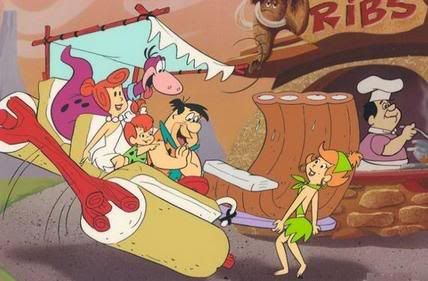
I wonder how Fred and Wilma slept??
This is new one for me, but apparently many people are glycine deficient... I'm not sure what I think of this because from what I read elsewhere, glycine is considered a 'non-essential amino acid,' so why is it problematic to be glycine-deficient if it's 'non-essential'? I need to do some more research on this. Am I just not getting it because I'm sleep deprived??

Anyway, I thought I'd just share what I read, in case another insomniac is out there debating whether or not to eat the chicken skin tonight. Go ahead and eat the skin... and let me know how you slept. 

Of course, I also read about eating turkey and drinking tart cherry juice and warm milk. Those all fit in the 'been there/done that/did nothing for me' category, but the above were a few new ones I thought I'd pass along. If you try them and they work, let me know. 

Now I'm going to turn off the blue light of my computer and say night-night. Hopefully this long day will end and tomorrow will not start at 3am. If it does, I'll be doing some gelatin powder shots. Stay tuned...

Thursday, December 19, 2013

What I Eat

Everything.

That's what I eat. Sometimes all at once, which isn't such a good thing. Anyway, someone recently asked me about my eats, so I thought I'd give you a brutally honest report.

Before I get started, I want to tell you that I didn't plan this post in advance. It's not like I decided at 5am that today is the day I'm going to record what I eat for posterity, thus making exceptionally wise and healthy food choices that make me appear healthful and disciplined, etc. We keep it real here at the barre.

Ok, here we go.

5.00am, wake up, roll out of bed and turn on coffee pot, which is conveniently located in my closet. Yes, I don't even have to walk downstairs! I believe in coffee. Roll back into bed until I hear the blessed gurgling sound of completed brewing. So, that's one large cup of Peet's with about a 1/4 c. half-and-half. (I like my coffee light and spicy, just like me.)

7am, Breakfast Egg Salad from the Physique 57 book. This involves quinoa, steamed baby kale, a hard boiled egg, olive oil and some avocado added.

11.30am, fix lunch for small people and inhale 2? maybe 3? tablespoons of peanut butter. Now I'm too full for lunch.

1.45pm, eat large salad with organic greens, goat cheese, slivered almonds, avocado and mandarin orange, followed by maybe a quarter cup full-fat Greek yogurt with a drizzle of honey.

4.45pm, start making dinner for the small people. Daddy's out of town on business, left this morning. He travels a lot. After a couple of days, we get into a groove, but we're not there yet so I pour myself a glass of sangria, which weakens all resolve. Oh no...

5.15pm, inhale steamed broccoli (maybe organic? I don't know) and an ungodly amount of Dino Bites (definitely not organic... or free-range, but 'made from whole grains,' according to the package. Whatever.)

Check out that list on the left--lots of omega-3, iron, etc. Probably a load of crap, but nice attempt to relieve the cognitive dissonance of feeding your children processed dinosaur-shaped chicken nuggets.

I know. God didn't intend chicken to come in the shape of dinosaurs. It's unnatural. It's also convenient and the kids like it. When Daddy's away, something has to give. Do I sound defensive? I do. I am.

5.30pm, Small people wanted more Dino Bites than I anticipated, so I'm still hungry. Eat 2? Maybe 3? tablespoons of peanut butter. (In case you can't tell, I eat a lot of peanut butter. If it weren't for nut butters, I'd be a total babe.) With chocolate chips. I continue to munch chips from the bag. A bad idea. I know this. I realize that I'm starting to feel yucky. I put away the chips.

As you see, my diet isn't perfect. But you know what? I don't believe in perfect. I believe in good enough. I'm kind of a recovering perfectionist, so this is progress for me. I used to try to eat 'perfectly.' In fact, I've tried many times to eat 'perfectly,' each time tweaking my definition of 'perfect,' and each time, failing.

So I've given up perfect. Now I try for good enough. Eating healthfully is important, but it isn't paramount. I'm not righteous because of what I eat. Or don't eat. I truly believe this, but at the same time, I struggle. I've ingested, along with Dino Bites, some of the moralistic laws of the food purist culture.

The food purists denounce the factory farms, the pesticides, the genetically-modified foods, etc. There are, of course, variations within the food purist camp, but really, I think the food purists make some decent points. We've seriously messed around with our food supply to a rather alarming degree. There are some real injustices surrounding how food is grown and produced, some of which negatively affect our health, our local economies and our planet.

But the food purists, generally, have a lot of laws. A lot of thou-shalt-nots, and this is where I have a hard time getting on board with them. I think organic, family-run farms, farmer's markets, free-range, etc. is all great. However, when it becomes something to which you shackle yourself, something that binds you to such a degree that don't eat large categories of food, when you can't relax your laws to receive or extend hospitality, I can't get behind that.

We do function best on real, whole foods in their natural state, but we don't need to be enslaved to them. (We also don't need to be enslaved to cookies, but that's another post.) Food is meant to nourish us, to sustain us so we can... well, get on with things. I don't want to go around providing people with a list of all the things I don't eat. (Please note, that's don't eat, not can't eat. There's a difference.) If I'm hungry and Jesus is offering me a fish sandwich, I'm not quibbling over whether or not the fish was wild-caught and rich in omega-3s.

But that's ok. I have Dino Bites for that.

Sunday, November 24, 2013

Chew On This

I had a conversation the other night with a friend who has gone paleo, as in the famous paleolithic diet that eschews grains and dairy in favor of lots of meat and veg. It apparently mimics the way cavemen ate before people settled down long enough to grow crops. My friend is actually on an even stricter version because she has an auto-immune disorder. She's loving it and feels great.

Another friend recently went on a month-long juice fast. Drinking only homemade juices enabled her to shrink her enlarged thyroid, drop needed weight and go off her blood pressure medication. She's a little sick of juice, but she feels great.

Last week my Darling Cousin completed a cleanse, during which she drank sludgy green concoctions that looked like this:
She posted this picture on Facebook... her dinner that resembles pureed grass clippings in contrast to her friends' chewable foods. You know, DC, I'm thinking this picture isn't the best PR for a cleanse, but maybe that's just me??

She described her experience thus: "The first few days were rough but I feel amazing. I think that working with a health consultant who provided us with daily guidance and support plus having a support group of other people doing it, really helped make the process very easy and enjoyable. It was like we were all stranded in a dinghy working together to get back shore."

Did I mention DC is in advertising?

Anyway, DC says she feels great and that I 'should do it!'

Everyone's feeling great. Isn't that great? I wouldn't mind feeling great. Here's the problem: I like chewing. I like chewing whole grains and dairy foods, like cheese. I'm a big fan of chewing.

I like drinking coffee, too. I think drinking coffee makes me a better mother. I probably can't imbibe my favorite libations while on a cleanse. Instead I'll have to take things I usually chew and liquefy them. Same with the juice fast.

The other thing is that I've done some of my world-famous exhaustive internet researchtm and found  much conflicting information on these topics so as to puzzle me exceedingly. For example, I read glowing reports of juicing and it's benefits, that it delivers more nutrients than just eating veggies and fruit straight. Then I'd read something else about juicing stripping the fiber from the food and that you're better off just eating a salad. Clearly, for my juicing friend, it was an unmitigated success (assuming she continues feeling great.) But somehow I find it difficult to embrace things like juicing.

When it comes to eating and other things I need to do for my health and well-being, I'm all about sustainability. I believe in finding a way to eat and move that I can stick with over time. That's why I struggle with very strict diets or fasts, even those that are designed to be undertaken for short periods of time. I always find myself thinking, what do I do when I'm done? I can't drink my food forever. At some point, I'm going to go back to Peet's and Sam Adams, chocolate and chewing.

My paleo friend eats this way because she needs to. I think she's liking it, too, but she got into it because she needs it to be healthy. I have another friend who has fibromyalgia and can't have gluten. If she unwittingly eats even a little bit of gluten, she aches. If she were to eat a slice of pizza, she'd be bedridden the following day. Obviously, these friends are wise to forever shun these things. Food is meant to fuel us and sustain us. God made food yummy so we'd eat and live. If I react strongly to certain foods, if they aren't life-giving to me, then yes, I'll happily do without.

However, I feel very blessed not to have these types of conditions. I limit some foods that don't make me feel good, but I can eat them without threat to life and functionality, and for this, I am very thankful. I have the freedom to eat anything, and I do.

However, I must confess that lately, I have been enjoying my freedom a little too much. Everything is permissible, but not everything is beneficial. Someone, who shall remain nameless, brought a big bag of Lindt balls into the house, ate maybe two of them, then left the state. Lindt balls are so addictive they might as well come with a pitchfork and horns.

In all seriousness, I must take full responsibility for my excessive Lindt ball consumption. No one forced me to eat them. I wish I were the sort of person who could eat one or two, enjoy it and put the bag back in the cupboard, but I'm not. These are the kinds of things I really just can't have in the house. I'm a weak-willed woman when it comes to Lindt balls. And donuts. And brownies. And cake.

This morning I woke up feeling puffy, sluggish and decidedly not great, so while the rest of my family were enjoying Darling Husband's world-famous Sunday morning pancakestm, I dug out a smoothie recipe I copied from a magazine I read in a doctor's waiting room.

My smoothie contained greek yogurt, grapes, some avocado, lime juice, a pear and two cups of grass clippings. I also added maybe a cup of almond milk because I don't have a Vitamix and it wouldn't blend without some liquid.

Et voila! I know, the lime wedge was a nice touch.
So this, along with a cup of dandelion tea, was my breakfast this morning (preceded by coffee, since I want to be a good mother.) Now I'm waiting around for the 'feel great' to kick in. Anytime now! I'm ready!


(Feel free to pop my expectations balloon in the comments section.)

Wednesday, November 13, 2013

Bananas and Dandelion Tea: Breakfast of Champions

My in-laws are here for a visit, which means there is a lot of yummy Chinese food happening. They are big-time foodies and great cooks. I know, you want to come over.

I really don't want this to be a TMI blog, but I seem to have some issues with fluid retention, and Chinese food is a major culprit for me, especially when it's restaurant Chinese food. At home, I season my food lightly with sea salt, so I'm not used to taking in a lot of sodium, and restaurant food is full of it. I turn into a massive fluid hoarder. I could be a reality show on TLC with all this water I'm holding onto. It seems to be getting worse as I get older. Now, rather than my clothes just being tight, I also get these digs under my eyes. It looks like someone took a chisel to my face. I'd post a picture, but I wouldn't want to scare anyone. That, and I'm vain.

Ok, so now that the dudes are out of the room, we can get real. Fluid retention affects everyone at some level, but let's face it--it's more common in women. Bloating is one of the more unpleasant symptoms of PMS. It's pretty harsh, particularly since you're already witchy and crying at every Geico commercial. It would be nice if at least your clothes fit.

I had a bout of bloat so bad over the summer that I did some exhaustive internet research on what to do about it. Once again, hard-hitting journalism here at the barre, people. Here's what I found:

  • Fluid retention results from a potassium/sodium imbalance. Eating potassium rich foods restores equilibrium. Bananas are commonly thought of as a great source, but actually sweet potatoes top the potassium list, followed by tomato paste. Who knew?
  • Drink lots of water. That may seem counter-intuitive to some, but drinking water when you're retaining fluid is the best thing you can do. It flushes out your system and reassures you poor bloated body that you are not, in fact, in a desert. You only ate General Tso's chicken at Lucky Chang's Chinese Emporium.
  • Adding mint and cucumber supposedly helps, too. I get why the water-rich cukes would help, but not so much the mint. I grow mint, though, so I'll toss some mint leaves in my water. Why not?
  • Another interesting suggestion I found was drinking dandelion tea. Yes, the pesky weed. I don't know why this supposedly works, but I found many references to it on the blessed internet, so I thought I'd give it a shot. I went to Whole Paycheck and paid... wait for it.... eight frickin' dollars for a box of dandelion tea bags. This was particularly painful since my lawn, at the time, was full of dandelions. Next summer I'm making my own. And selling it outside Chinese restaurants.
  • Here's a bit of an odd one: take a teaspoon of Angostura Bitters--straight. You can find this at liquor stores, since it's typically used to flavor cocktails. It's kind of clovey/spicy. Given the name you'd think it would be really vile tasting, but it's not really that bad, definitely better than the baking soda I recommended last month to reduce muscle soreness. I got this tip from a model who swore by it, so take that with whatever value you give to the opinions of fashion models. I'm willing to bet someone who makes her living from looking good might actually know what she's talking about.
  • Lastly--parsley. When Lucky Chang's brings you your dinner, don't just ditch the parsley garnish--eat it! Parsley is a natural diuretic.
Here are a few of the items from my anti-bloating arsenal. They're at the ready this week. Honestly, I've never isolated any of these variables so really can't attest to the validity of any of these claims. Usually I'm so miserable when bloated that I try them all at once and eventually things get better. Who knows which, if any, is the magic bullet.

In the meantime, I'm thoroughly enjoying my food. My in-laws are most gracious to share their culinary skills with us, so I'm not complaining. It's delightful to be with them AND they minded the kids yesterday so I could get a mammogram and flu shot without hiring a sitter or begging a favor off a friend, which was delightful. Did I really just say a mammogram and a flu shot was delightful? I did. Is that sad? Don't answer that.

Anyone else have anti-bloating tips?? I'm all ears. Pull up a chair for cup of weed tea.