Monday, August 17, 2015

The Myth of the Ideal Diet

I'm currently engaged in a most interesting discussion about the merits, or lack thereof, of animal foods with a vegan and a really-limit-your-animal-foods person on Facebook. I've never met either one of them, but they're delightful, interesting and the whole conversation is civil and respectful. So it can happen. I know we often only hear about the mud-slinging, but rational, polite discourse can occur online and I think we should shout 'hurrah!' when it does.

So hurrah!

Anyhoo, as you all know, I'm not a vegan. In fact, I recently bought half a grass-fed cow from a rancher in Maine. As a former vegetarian, I've been converted to the moo-side, but I think it's important to note that there is no one ideal diet for everyone. Our nutritional needs change, and our dietary habits shift based on a number of factors. 

*********************

A few months ago, I read a most interesting book, Nutrition and Physical Degeneration by Dr. Weston A. Price. I know, snappy title. Sounds like a real page-turner. I'll own that it's a bit dry in spots, but the premise is fascinating. 

Dr. Price was a dentist from Cleveland, Ohio. He noticed that dental health was declining in his practice with each subsequent generation. He wondered why this might be, so with his wife, Martha, he embarked on a lengthy tour of the world in the early 1930s. The Prices visited remote areas of the globe, tracking down isolated people groups to study their teeth. They started in the Swiss Alps, visiting a village that was not yet connected to the modern world by road and traveled through Europe, to arctic regions of North America, islands of the South Pacific and remote African tribes. 

As you might imagine, the diets of these different people were as varied as the landscapes in which they lived. The Swiss lived on raw milk, cheese and a type of sourdough bread, the Inuits of the arctic ate only fish, meat and a little seaweed, the Masai of Africa ate meat, milk and animal blood, the South Pacific islanders ate mostly fish, fruit and vegetables, and so on. In short, the people ate what was available. Foods that were difficult to digest were prepared in ways to aid digestion. The prized cuts of meat were always the fattiest, particularly the organs. Our now expensive tenderloins would have often been fed to the dogs. 

Instead of finding people riddled with cavities and heart disease, Dr. and Mrs. Price found the opposite. In these communities, the people who consumed their traditional foods enjoyed remarkably good dental and physical health. The only ones who suffered were those who had adopted the sugary refined foods of the modern diet. 

One picture Dr. Price took from an isolated island in the Outer Hebrides of Scotland is particularly telling:
Image: nourishingourchildren.org

The island had only recently been connected to the mainland via ferry service, and with the ferries came all the modern foods--refined flour, sugar, jams, Crisco and tinned foods. The brother on the left worked at the ferry dock and enjoyed the modern foods. His teeth began rotting and the father said this son struggled to get out of bed in the morning. The brother on the right ate the traditional food the islanders had been eating for centuries--mostly codfish and oats, traditionally prepared. He had no dental decay and excellent health. Not a varied diet, but whole food and no 'displacing foods of modern commerce,' as Price called them.

These men are brothers. Same genes, different food. 

Dr. Price found the same tragic effects in every place he visited. These 'displacing foods of modern commerce' resulted in rampant tooth decay and illness.

As I've been discussing the meat/plant debate on Facebook, I'm struck by what a luxurious age we live in. We are no longer constrained by what is seasonal, what is available wherever we live. We can get pretty much any food, any time. This tremendous liberty is, in some respects, a blessing. I'm guessing oat-stuffed codfish gets pretty old after a while. But the dark side is navigating our way through this sea, both literal and figurative, of food options we have set before us. There is so much choice. And not all of it is to our benefit. 

There are many lessons to be learned from Dr. Price's research, but one key take-away is this: a steady diet of sugar and refined foods is not good. For anyone. Apart from that, there are many, many ways of eating that can be good for us. Take your pick!

Monday, August 3, 2015

What to do when you gain weight

Over the winter I put on some weight. I truly did not notice this was occurring. Probably because I was too busy shoveling.

I discovered this most inconvenient truth sometime in late May, as I was digging out my summer clothes. Back in October, I had bought a very cute skirt with the little shorts underneath, a most convenient garment for the mother-of-small-people. Loved this thing. Very excited to wear it. Fir back in October, so assumed it would fit in May.

But it was tight. Way tight. Thanks to the Lycra contained therein, I could get it on, but it looked.... Not good. And it felt even worse. So I got on the scale and whoa.... Nearly 15lbs.

Oh dear. I try not to freak about weight. As I've mentioned before, I don't think it is the most important thing. It's a thing, but not the most important one. But the fact that all my summer clothes were tight was a most depressing development.

I started doing some detective work and discovered that part of my problem was the anti-inflammatory I was taking for my torn rotator cuff. I am not sorry I took it, but meds can absolutely affect these sorts of things. I gradually went off and and boom! Nearly 5lbs. Gone. That still leaves with 10 extra, but hey, every little bit helps.

You know what else I did?

I bought some new clothes. Not a whole wardrobe, just a couple of skirts and two capris. I honestly cannot account for those 10lbs. I eat a healthy diet and move around a lot. I'm going to explore some other things that might be contributing, but I'm not going to starve myself or engage in punishing exercise, both of which I suspect would be counter-productive anyway, but I'm also not going to walk around in too-tight clothes feeling lousy about myself.

Which leads me to my point. (I always get ther!) you know why people have muffin tops? Because their clothes don't fit. Maybe they need to cultivate some different habits, but first stop is a new pair of jeans. Because life is too short to walk around feeling like. A polish sausage in a hot dogs dress.*

*thats a good one! Hugh? Credit goes to my old roommate Amy.

Wednesday, July 8, 2015

How Many Burpees in a Chocolate Bar?

One of my Facebook friends (who also shares my birthday AND my Myers-Briggs personality type, making us two peas in the proverbial pod) recently posted a little mini-rant about this article on PopSugar.

Ms. Jenny Sugar has calculated how many burpees must be performed to burn off various dietary indulgences. She allows that 'we all need to indulge a little and satisfy our cravings,' but admits that 'sometimes when you try to eat just a little square of dark chocolate, you end up eating the entire bar!'

I feel you, Jenny. Truly. 

So Jenny did some math for us and came up with how many minutes of burpees must be performed to burn off some seriously yummy foods. That dark chocolate bar? One hour of burpees. Whoa.

Burpees are also called squat thrusts. (I don't know why they're called burpees, but my little boys have their theories are and laughing uproariously as I type.) They are also notoriously wicked hard. Just one or two isn't bad, but burpeeing for an hour... ow. Go ahead and try one.

I'll wait.

See? Hard. This is how most people feel about burpees:
Image: pinterest
Before I get into the psychological fly in the ointment, I would like to pop a hole in Ms. Sugar's balloon. I really hate to diss anyone who does math because we all know how much I hate it, but really, how many calories people burn doing anything is SO HIGHLY VARIABLE. I guarantee Tom Brady wouldn't need to do an hour of burpees to burn off that chocolate bar. He's a big guy. He could just toss around a well-inflated football for a few minutes, if he can find one.

(Doh! I'm going to be exiled to Rhode Island for that one!)

Jenny's point, of course, is for us to think long and hard about whether or not we should really eat that yummy-fill-in-the-blank because that is a lot of hard slogging to pay for it. But my FB/birthday/MBTI twin said we should just enjoy a treat from time to time and not get all worked up about 'paying it off,' and I couldn't agree more. Wow, we March 25th INFJs are so in-synch!

One of bday/MBTI twin's friends said she liked the burpee currency because she, like pretty much everyone, hates burpees, so thinking of an indulgence in these terms really gives her pause. And I get that. But still... I hate thinking of exercise as punishment, as penance for enjoying a treat.

So how do you avoid schnarfing down the whole chocolate bar? I find when I limit my sugar intake, I struggle with way fewer cravings that are even asking to be satisfied. When I eat whole, real food, as close to it's natural state as possible, I am far less likely to binge. As for chocolate, I eat the really dark stuff. No binge... it's too intense.

But as a recovering binger, I am still vulnerable, so I just don't keep that stuff in the house. Anything that really tempts me I only buy or make for special occasions, and then I simply.... enjoy it.

No burpees required.

Monday, July 6, 2015

Redefining Romance and Excitement

I speak French. Or, at least, I used to. Now I just shout 'on y va!' to my children in the mornings and 'ouvre ta bouche, s'il te plait' when I brush their teeth. Though I'm thinking I should seek to resurrect my French skills, in the event that the Darling Husband comes home saying, "Guess what?! We're going to France!" That would be exciting!

The DH is out of town, so last night I decided to search some French movies on Amazon. Watching TV in french is how I made serious progress all those years ago, when my memory was young and impressionable.

But here's the problem: just about every movie I previewed was about adultery. It seems some showed consequences for this, which I appreciate. I didn't stick around to find out what those were, but prior to the consequences, there was the promise of lot of steamy sex. Which I suppose is how affairs work usually. I still felt annoyed, however. What is it with these French film makers? Why is everyone having affairs? Why can't we ever find movies about passionate marriages?? Why is every marriage depicted as so boring or difficult that people have affairs?

I got fed up and annoyed and I realize this is not a precursor to sleep, so I started perusing light, frothy American movies. These aren't so much about adultery, but dating. Have you ever noticed that practically every light, frothy American movie is about how couples get together? And they're almost always young, skinny and beautiful.

Seriously. Every. Single. Movie. How to get together. Never how to stay together. It seems that marriage is not deemed film-worthy. Marriage is boring. It is not romantic. It is not exciting. Only getting there is romantic and exciting, but once you're there, you're watching something that's telling you to look elsewhere.

It's like you're expected to start out with an American movie and end up with a French one.

************************

The DH and I are celebrating our tenth anniversary this year. And you know what? We still love each other. In fact, we still like each other. But if movies were to be believed, one or both of us should really be shopping around for some romance and excitement.

The older I get, the more the definitions of these terms change. I think it's romantic that my husband comes home to me at night, rather than finding an excuse to be out. I think its wicked cool that he fixed the furnace. Honestly. The furnace died and my clever man fixed it. (You never think a man in a headlamp is sexy until the house is really cold.) And 'excitement?' It is exciting when you're rushing to the hospital because your child just had a seizure on the school bus, but it isn't good.

Still, no one would want to watch a movie of my life. Everyone gets along too well, and I don't think we're going to see a headlamp-wearing suitor on The Bachelor anytime soon. But I don't think the problem is my life. The problem is the movies. Or at least, too many of them consumed without a healthy dose of real life in between. Too many movies make finding contentment in real life impossible.

We need to redefine romance. Sometimes it's just bringing in a flower from the garden. Or looking out the window at our small people frolicking on the grass to the melodious soundtrack of the neighbor's lawnmower.

This is the life we've made together. And it's good.

Saturday, June 13, 2015

Five Things I've Learned from My Injury

Gosh, I rant a lot, don't I? I probably sound like I'm an angry person, but I'm really not. Really. I'm generally pretty sanguine. I think sometimes I rant on my blog because I need an outlet, especially lately. But I'm sorry if I'm ranting too much. I'll try to be more cheerful.
That's my little darling in the hospital the day after Christmas.
He's pretty much always happy, even in the hospital at Christmas.  Love that about him. 


Part of the reason I've been ranting, though, is my &%*#! shoulder injury. (sorry... CHEERFUL!) Injuries are so annoying. I finally got around to getting an MRI. It turns out I have a rotator cuff tear. It's not a big one so it doesn't require surgery to repair it, but it's kind of extra messed up because I have loads of scar tissue and adhesions and infammation because I... well... waited too long to get it looked at.

So, in the interest of every-cloud-has-a-silver-lining/whenever-God-closes-a-door-somewhere-He-opens-a-window, etc, I'm going to share with you what I've learned from my injury:


  1. Don't wait to see someone. This is my biggest regret and one I have resolved to remedy forthwith. My shoulder has been bothering me off-and-on for two years, but I never saw anyone about it because I was in St. Mother mode and I just did not prioritize my own health and well-being. It's not that you have to rush into the doc for every little ache and pain, but little aches and strains get better... and stay better. Bad things don't go away with a little ice and a rest. They might feel a little better, but then they come back. I should have figured that out sooner. My bad.
  2. Sometimes, you need to take the drugs. I don't like taking drugs. I'd rather do pretty much any lifestyle change to avoid medication. I really do believe our bodies can often heal themselves with good food, appropriate movement, rest, etc... but sometimes, they can't. My doctor prescribed a pretty potent anti-inflammatory for me and whoa... can we say helpful?? Once we got the inflammation under control, things have gotten a lot better. I tried to do this with diet (remember the Whole &%#*!@ 30?) but it didn't work. I needed the drugs. Lesson learned.
  3. I need movement like I need air and water. I knew this before, but after taking several weeks off from any lalala-producing exercise, I learned that while my closets are beautifully organized, I need to move. I need the movement. We were made to move. (No, a shoulder injury does not require total rest, but one doctor was concerned it might be disc-related and so suggested total rest for a while. Mercifully, not disc-related. Phew.)
  4. The perfect really is the enemy of the good. It's better to modify the living daylights out of the workout and DO it, rather than not do anything at all. I modify now. A lot.
  5. Functionality trumps aesthetics every.single.time. I believed that before, but whoa, I really believe it now. You can be cute as a button, but if you can't move and live pain-free and get all your stuff done, all the cuteness is the world is like dust in the wind.
So those are my deep thoughts for the day. I've also been exploring some very interesting recovery techniques that I am excited to share with you (CHEERFUL!), but I'm off the Bar Method. I'm going to do pushups against the barre with my head held high.

Thursday, June 11, 2015

Don't Shut Me Up: Why We Need to Allow Respectful Dissent

I stepped into a bit of a hornet's nest today. The internet variety, I mean.

I belonged to a closed Facebook group devoted to the Firm, a 1980's workout video series that developed a cult following, of which I was a proud member.

The Firm was created by Anna Benson, who pioneered the integration of heavier weights in women's workouts in an era when weights were not the done thing. Women feared lifting anything heavier than a Campbell's soup can would make them 'bulky.' Anna said, 'pffft' to that and developed a series of truly wonderful, if not kinda 80's cheesy, workout videos that got me into fitness and truly changed my life. I will always be grateful to Anna for her creativity and vision. Anna ended up selling the Firm and they are still going, but in my opinion, the new Firm is nothing like it was in Anna's glory days.

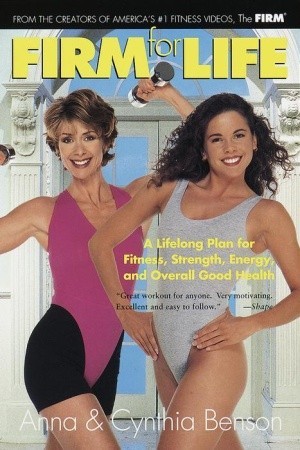
However, Anna wrote a book sometime in the 1990's called Firm for Life.
It got generally pretty terrible reviews on Amazon, but I was such a Firm junkie that I bought it anyway. I ended up agreeing with terrible reviews. I did not find the book helpful, and I did not like Anna's attitude toward appearance or her treatment of other fitness professionals. I recall she even went so far as to call exercise pioneer Jack LaLanne's skin 'crepey.' She lectured us on the importance of politeness, then comes out with that? Mean girl, maybe?

The take-away image I got of Anna was that she was shallow, catty and entirely too image-conscious. Maybe she wasn't like that really, but that's how she came across to me, and a lot of other people. But hey, nobody's perfect and Anna put out a good workout back in her day so I can get over it. I just didn't need to know her views on grey hairs ('for heaven's sake--cover those greys!'), thong underwear ('so important because we wouldn't want panty lines!') or her book list that would help me develop my 'Firm spirit.' I didn't see what that had to do with workouts and healthy eating.

So, what does this have to do with hornets?

Someone on this Facebook group asked about the book. 'It got really bad reviews--what does everyone think? Should I buy it?'

Oh, the responses were glowing!

"The book is so wonderful!"

"I loved it!"

"I'm so glad I bought it!"

I'm thinking, really? So I chimed in with my thoughts. I didn't like the book. (I might have described it as 'terrible.') I didn't think it was useful, I thought Anna came across as mean-spirited and shallow. I said I would probably have felt uncomfortable around her because I don't get regular manicures. I emphasized that while I loved the workouts, I could have done without the book. I said if you find it for a bargain price, check it out. But I wouldn't pay $35 on eBay. Or something along those lines.

Whoa. Cue hornets. While the person who asked the question seemed to appreciate my comments, others decidedly did not. I was called a 'Debbie Downer' and basically accused of being a negative troll. The group used to be 'fun and inspirational,' and now here I had the temerity to criticize Anna. No one had ever said such awful things about Anna before.

I was, quite frankly, agog. Someone asked a question, and I gave my opinion. Someone was making a purchasing decision, so I gave her my honest appraisal of the book. I was told, "We don't say bad things about Anna. She changed our lives." Did I mention Anna died a few years ago? 'We don't say bad things about the dead. People who knew her read this.' But, I reasoned, "someone wanted to know if she should spend money on the book, would it be a worthwhile purchase? Are we not allowed to answer 'no' to that question? Are we supposed to be all sunshine and roses??"

"That would be nice," I was told.

One hornet told me I should go start my own group if I wanted to say negative things about Anna.

Oh. Ok.

The whole thing reminded me of a blog post I read recently entitled 'The Worst Advice My Mother Ever Gave Me." What might that be? Author Deb Rankin said it was that parenting classic, 'if you don't have anything nice to say about someone, don't say anything at all.'

She writes:
Encouragement and positive words are great, but the advice is dangerous for several reasons. Breaking the connection between emotion and communication makes one lonely and isolated, because no one knows the real you. Suppressed thoughts will come out, not always in healthy ways. Finally, the world needs people brave enough to speak out against evil and bad behavior.

I'm willing to bet Deb's mother (and mothers across the globe) mean for us to avoid unkindness and gossip, and I'm all for that. But I think Deb makes some good points. Sadly, the internet has become a breeding ground for bad behavior. All you have to do is click on the comments link to any number of articles to read nasty, rude, obscene remarks people make. "You stupid [insert expletive]! You don't know your [expletive] from your [expletive]! I hope you rot in [expletive]!" There is no place for that in a civilized society, and I truly grieve when I see some of what is written.

However, my comments were not of that ilk. They were pointed, but rational. I provided examples to support my opinions. And in fairness, the hornets were not nasty. But to shut down reasoned discourse, to halt a sensible dialogue just because we don't like what someone is saying... that's sad, too.

When we write, we put ourselves 'out there.' We have to expect that people might not like what we say, they might not agree, but I for one welcome respectful dissent. Muscles don't change without resistance. People don't change without challenge.

After some reflection, I decided to 'unjoin' the Facebook group. It was clear the members didn't want me there, and I don't want to be part of any group where I get a smackdown for thinking critically and expressing a dissenting opinion. It's just too... well... cultish.

What do you think? By all means, share. Respectful dissent is welcome!

Wednesday, May 27, 2015

By Aiming at Weight, We Miss the Mark

I've never liked math, and I've never really been particularly good at it. Math was painful in school, so I had to be creative to get through it. I ended up assigning personalities to the different digits and putting them on teams--the answer to the equation meant a point for the particular team and whichever team had the most points at the end of the worksheet won. I had to make a game of it because it was so painfully boring.

But people love numbers, especially those relating to health. Numbers are neat and tidy, (or so it seems.) Doctors and journalists like to assess people's state of health according to the numbers--weight, body mass index (BMI), cholesterol, blood pressure, etc. Some of those numbers really are significant, like blood pressure. A BP too high or too low really does spell trouble, but those other numbers? Mmmm, maybe not so much.
Image: bradgouthrofitness.com

Recently I read the book Secrets of the Eating Lab by psychologist Traci Mann of the University of Minnesota. Mann spends a good bit of time explaining why diets, that is, restrictive ways of eating that are meant to result in weight loss, are not effective.

Certainly, most people lose weight on diets, but apparently only 5% of dieters are able to maintain this weight loss over the long haul. 

Yes, 95% of people who lose weight through dieting gain back some, all or even more weight. And so they go back to dieting and repeat the process again. And again, and again. This lather, rinse, repeat action is called 'weight cycling,' or in common parlance, 'yo-yo dieting.' Some research suggests this is very not good for us, that remaining heavier is actually healthier than going up and down, over and over. Even if weight cycling were perfectly healthy physically, it has to be massively head-wrecking.

But what about that 5%, you might say?

A few months ago, I watched an HBO documentary called The Weight of the Nation. (It's on youtube, if you're interested, but I can't say I would necessarily recommend it.) One segment features two women who have both lost 100 or so pounds and kept it off for over a year. They're happier and healthier and feel great, and that's great!

But wow... maintaining their lower weights is like a full-time job. They speed-walk miles everyday. They were shown ordering lunch for takeout. Just deciding what they were going to eat involved calculator, pen and paper. It was like a meeting of the Congressional Budget Office. (Not that I've ever been to one, but you know what I mean.) "We could get this instead of that, ask them to cook it this way, take away the sauce and that saves us 200 calories!" For real. This is how these women live. And I respect them for it, but I suspect this kind of effort is why so many people gain back the weight. That's a lot of thinking and math involved in just ordering lunch... even for someone who likes math.

Of course, there are physiological reasons why weight regain happens, but I suspect a lot of it is that the behaviors required to lose the weight in the first place are just not sustainable. Draconian calorie restriction, tedious calorie counting, lengthy and/or unfun, grueling workouts. We just can't keep them up, and so we don't.

Mann recommends shooting for your 'leanest, livable weight,' meaning that number at which you can comfortably live without heroic effort. Research shows we all have a set weight range--a spectrum at which our bodies are most comfortable. We can influence this number to some degree through lifestyle choices, but it requires serious effort to lose--or even gain--a significant amount outside this range.

This sounds like good advice, but I'd really prefer to think of it as adopting habits. Excessive weight gain is sometimes just a symptom of bad habits. Focusing on the weight misses the mark. Shoot for healthy behaviors, tackle them one at a time, until they become (at least somewhat) effortless.

It might require a drastic change at first to break a habit--as I did in giving up sugar last year, but now not eating sugar is normal for me. It's effortless. I don't experience strong cravings or even enjoy very sweet stuff anymore. It didn't result in any significant weight loss--in fact, I've actually gained a little weight in the past year--but reducing my sugar consumption was an absolutely healthy habit. But focusing on the scale number wouldn't have helped me. Instead, I might have become discouraged and been tempted to give up an undoubtedly good habit.

I can appreciate why people like the numbers. They're quantifiable. You can pretty easily measure numbers, but the big picture--the important one--is more than just the math.