Monday, July 6, 2015

Redefining Romance and Excitement

I speak French. Or, at least, I used to. Now I just shout 'on y va!' to my children in the mornings and 'ouvre ta bouche, s'il te plait' when I brush their teeth. Though I'm thinking I should seek to resurrect my French skills, in the event that the Darling Husband comes home saying, "Guess what?! We're going to France!" That would be exciting!

The DH is out of town, so last night I decided to search some French movies on Amazon. Watching TV in french is how I made serious progress all those years ago, when my memory was young and impressionable.

But here's the problem: just about every movie I previewed was about adultery. It seems some showed consequences for this, which I appreciate. I didn't stick around to find out what those were, but prior to the consequences, there was the promise of lot of steamy sex. Which I suppose is how affairs work usually. I still felt annoyed, however. What is it with these French film makers? Why is everyone having affairs? Why can't we ever find movies about passionate marriages?? Why is every marriage depicted as so boring or difficult that people have affairs?

I got fed up and annoyed and I realize this is not a precursor to sleep, so I started perusing light, frothy American movies. These aren't so much about adultery, but dating. Have you ever noticed that practically every light, frothy American movie is about how couples get together? And they're almost always young, skinny and beautiful.

Seriously. Every. Single. Movie. How to get together. Never how to stay together. It seems that marriage is not deemed film-worthy. Marriage is boring. It is not romantic. It is not exciting. Only getting there is romantic and exciting, but once you're there, you're watching something that's telling you to look elsewhere.

It's like you're expected to start out with an American movie and end up with a French one.

************************

The DH and I are celebrating our tenth anniversary this year. And you know what? We still love each other. In fact, we still like each other. But if movies were to be believed, one or both of us should really be shopping around for some romance and excitement.

The older I get, the more the definitions of these terms change. I think it's romantic that my husband comes home to me at night, rather than finding an excuse to be out. I think its wicked cool that he fixed the furnace. Honestly. The furnace died and my clever man fixed it. (You never think a man in a headlamp is sexy until the house is really cold.) And 'excitement?' It is exciting when you're rushing to the hospital because your child just had a seizure on the school bus, but it isn't good.

Still, no one would want to watch a movie of my life. Everyone gets along too well, and I don't think we're going to see a headlamp-wearing suitor on The Bachelor anytime soon. But I don't think the problem is my life. The problem is the movies. Or at least, too many of them consumed without a healthy dose of real life in between. Too many movies make finding contentment in real life impossible.

We need to redefine romance. Sometimes it's just bringing in a flower from the garden. Or looking out the window at our small people frolicking on the grass to the melodious soundtrack of the neighbor's lawnmower.

This is the life we've made together. And it's good.

Saturday, June 13, 2015

Five Things I've Learned from My Injury

Gosh, I rant a lot, don't I? I probably sound like I'm an angry person, but I'm really not. Really. I'm generally pretty sanguine. I think sometimes I rant on my blog because I need an outlet, especially lately. But I'm sorry if I'm ranting too much. I'll try to be more cheerful.
That's my little darling in the hospital the day after Christmas.
He's pretty much always happy, even in the hospital at Christmas.  Love that about him. 


Part of the reason I've been ranting, though, is my &%*#! shoulder injury. (sorry... CHEERFUL!) Injuries are so annoying. I finally got around to getting an MRI. It turns out I have a rotator cuff tear. It's not a big one so it doesn't require surgery to repair it, but it's kind of extra messed up because I have loads of scar tissue and adhesions and infammation because I... well... waited too long to get it looked at.

So, in the interest of every-cloud-has-a-silver-lining/whenever-God-closes-a-door-somewhere-He-opens-a-window, etc, I'm going to share with you what I've learned from my injury:


  1. Don't wait to see someone. This is my biggest regret and one I have resolved to remedy forthwith. My shoulder has been bothering me off-and-on for two years, but I never saw anyone about it because I was in St. Mother mode and I just did not prioritize my own health and well-being. It's not that you have to rush into the doc for every little ache and pain, but little aches and strains get better... and stay better. Bad things don't go away with a little ice and a rest. They might feel a little better, but then they come back. I should have figured that out sooner. My bad.
  2. Sometimes, you need to take the drugs. I don't like taking drugs. I'd rather do pretty much any lifestyle change to avoid medication. I really do believe our bodies can often heal themselves with good food, appropriate movement, rest, etc... but sometimes, they can't. My doctor prescribed a pretty potent anti-inflammatory for me and whoa... can we say helpful?? Once we got the inflammation under control, things have gotten a lot better. I tried to do this with diet (remember the Whole &%#*!@ 30?) but it didn't work. I needed the drugs. Lesson learned.
  3. I need movement like I need air and water. I knew this before, but after taking several weeks off from any lalala-producing exercise, I learned that while my closets are beautifully organized, I need to move. I need the movement. We were made to move. (No, a shoulder injury does not require total rest, but one doctor was concerned it might be disc-related and so suggested total rest for a while. Mercifully, not disc-related. Phew.)
  4. The perfect really is the enemy of the good. It's better to modify the living daylights out of the workout and DO it, rather than not do anything at all. I modify now. A lot.
  5. Functionality trumps aesthetics every.single.time. I believed that before, but whoa, I really believe it now. You can be cute as a button, but if you can't move and live pain-free and get all your stuff done, all the cuteness is the world is like dust in the wind.
So those are my deep thoughts for the day. I've also been exploring some very interesting recovery techniques that I am excited to share with you (CHEERFUL!), but I'm off the Bar Method. I'm going to do pushups against the barre with my head held high.

Thursday, June 11, 2015

Don't Shut Me Up: Why We Need to Allow Respectful Dissent

I stepped into a bit of a hornet's nest today. The internet variety, I mean.

I belonged to a closed Facebook group devoted to the Firm, a 1980's workout video series that developed a cult following, of which I was a proud member.

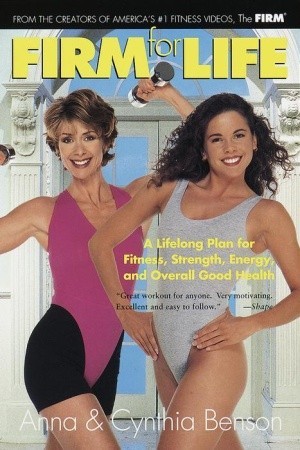
The Firm was created by Anna Benson, who pioneered the integration of heavier weights in women's workouts in an era when weights were not the done thing. Women feared lifting anything heavier than a Campbell's soup can would make them 'bulky.' Anna said, 'pffft' to that and developed a series of truly wonderful, if not kinda 80's cheesy, workout videos that got me into fitness and truly changed my life. I will always be grateful to Anna for her creativity and vision. Anna ended up selling the Firm and they are still going, but in my opinion, the new Firm is nothing like it was in Anna's glory days.

However, Anna wrote a book sometime in the 1990's called Firm for Life.
It got generally pretty terrible reviews on Amazon, but I was such a Firm junkie that I bought it anyway. I ended up agreeing with terrible reviews. I did not find the book helpful, and I did not like Anna's attitude toward appearance or her treatment of other fitness professionals. I recall she even went so far as to call exercise pioneer Jack LaLanne's skin 'crepey.' She lectured us on the importance of politeness, then comes out with that? Mean girl, maybe?

The take-away image I got of Anna was that she was shallow, catty and entirely too image-conscious. Maybe she wasn't like that really, but that's how she came across to me, and a lot of other people. But hey, nobody's perfect and Anna put out a good workout back in her day so I can get over it. I just didn't need to know her views on grey hairs ('for heaven's sake--cover those greys!'), thong underwear ('so important because we wouldn't want panty lines!') or her book list that would help me develop my 'Firm spirit.' I didn't see what that had to do with workouts and healthy eating.

So, what does this have to do with hornets?

Someone on this Facebook group asked about the book. 'It got really bad reviews--what does everyone think? Should I buy it?'

Oh, the responses were glowing!

"The book is so wonderful!"

"I loved it!"

"I'm so glad I bought it!"

I'm thinking, really? So I chimed in with my thoughts. I didn't like the book. (I might have described it as 'terrible.') I didn't think it was useful, I thought Anna came across as mean-spirited and shallow. I said I would probably have felt uncomfortable around her because I don't get regular manicures. I emphasized that while I loved the workouts, I could have done without the book. I said if you find it for a bargain price, check it out. But I wouldn't pay $35 on eBay. Or something along those lines.

Whoa. Cue hornets. While the person who asked the question seemed to appreciate my comments, others decidedly did not. I was called a 'Debbie Downer' and basically accused of being a negative troll. The group used to be 'fun and inspirational,' and now here I had the temerity to criticize Anna. No one had ever said such awful things about Anna before.

I was, quite frankly, agog. Someone asked a question, and I gave my opinion. Someone was making a purchasing decision, so I gave her my honest appraisal of the book. I was told, "We don't say bad things about Anna. She changed our lives." Did I mention Anna died a few years ago? 'We don't say bad things about the dead. People who knew her read this.' But, I reasoned, "someone wanted to know if she should spend money on the book, would it be a worthwhile purchase? Are we not allowed to answer 'no' to that question? Are we supposed to be all sunshine and roses??"

"That would be nice," I was told.

One hornet told me I should go start my own group if I wanted to say negative things about Anna.

Oh. Ok.

The whole thing reminded me of a blog post I read recently entitled 'The Worst Advice My Mother Ever Gave Me." What might that be? Author Deb Rankin said it was that parenting classic, 'if you don't have anything nice to say about someone, don't say anything at all.'

She writes:
Encouragement and positive words are great, but the advice is dangerous for several reasons. Breaking the connection between emotion and communication makes one lonely and isolated, because no one knows the real you. Suppressed thoughts will come out, not always in healthy ways. Finally, the world needs people brave enough to speak out against evil and bad behavior.

I'm willing to bet Deb's mother (and mothers across the globe) mean for us to avoid unkindness and gossip, and I'm all for that. But I think Deb makes some good points. Sadly, the internet has become a breeding ground for bad behavior. All you have to do is click on the comments link to any number of articles to read nasty, rude, obscene remarks people make. "You stupid [insert expletive]! You don't know your [expletive] from your [expletive]! I hope you rot in [expletive]!" There is no place for that in a civilized society, and I truly grieve when I see some of what is written.

However, my comments were not of that ilk. They were pointed, but rational. I provided examples to support my opinions. And in fairness, the hornets were not nasty. But to shut down reasoned discourse, to halt a sensible dialogue just because we don't like what someone is saying... that's sad, too.

When we write, we put ourselves 'out there.' We have to expect that people might not like what we say, they might not agree, but I for one welcome respectful dissent. Muscles don't change without resistance. People don't change without challenge.

After some reflection, I decided to 'unjoin' the Facebook group. It was clear the members didn't want me there, and I don't want to be part of any group where I get a smackdown for thinking critically and expressing a dissenting opinion. It's just too... well... cultish.

What do you think? By all means, share. Respectful dissent is welcome!

Wednesday, May 27, 2015

By Aiming at Weight, We Miss the Mark

I've never liked math, and I've never really been particularly good at it. Math was painful in school, so I had to be creative to get through it. I ended up assigning personalities to the different digits and putting them on teams--the answer to the equation meant a point for the particular team and whichever team had the most points at the end of the worksheet won. I had to make a game of it because it was so painfully boring.

But people love numbers, especially those relating to health. Numbers are neat and tidy, (or so it seems.) Doctors and journalists like to assess people's state of health according to the numbers--weight, body mass index (BMI), cholesterol, blood pressure, etc. Some of those numbers really are significant, like blood pressure. A BP too high or too low really does spell trouble, but those other numbers? Mmmm, maybe not so much.
Image: bradgouthrofitness.com

Recently I read the book Secrets of the Eating Lab by psychologist Traci Mann of the University of Minnesota. Mann spends a good bit of time explaining why diets, that is, restrictive ways of eating that are meant to result in weight loss, are not effective.

Certainly, most people lose weight on diets, but apparently only 5% of dieters are able to maintain this weight loss over the long haul. 

Yes, 95% of people who lose weight through dieting gain back some, all or even more weight. And so they go back to dieting and repeat the process again. And again, and again. This lather, rinse, repeat action is called 'weight cycling,' or in common parlance, 'yo-yo dieting.' Some research suggests this is very not good for us, that remaining heavier is actually healthier than going up and down, over and over. Even if weight cycling were perfectly healthy physically, it has to be massively head-wrecking.

But what about that 5%, you might say?

A few months ago, I watched an HBO documentary called The Weight of the Nation. (It's on youtube, if you're interested, but I can't say I would necessarily recommend it.) One segment features two women who have both lost 100 or so pounds and kept it off for over a year. They're happier and healthier and feel great, and that's great!

But wow... maintaining their lower weights is like a full-time job. They speed-walk miles everyday. They were shown ordering lunch for takeout. Just deciding what they were going to eat involved calculator, pen and paper. It was like a meeting of the Congressional Budget Office. (Not that I've ever been to one, but you know what I mean.) "We could get this instead of that, ask them to cook it this way, take away the sauce and that saves us 200 calories!" For real. This is how these women live. And I respect them for it, but I suspect this kind of effort is why so many people gain back the weight. That's a lot of thinking and math involved in just ordering lunch... even for someone who likes math.

Of course, there are physiological reasons why weight regain happens, but I suspect a lot of it is that the behaviors required to lose the weight in the first place are just not sustainable. Draconian calorie restriction, tedious calorie counting, lengthy and/or unfun, grueling workouts. We just can't keep them up, and so we don't.

Mann recommends shooting for your 'leanest, livable weight,' meaning that number at which you can comfortably live without heroic effort. Research shows we all have a set weight range--a spectrum at which our bodies are most comfortable. We can influence this number to some degree through lifestyle choices, but it requires serious effort to lose--or even gain--a significant amount outside this range.

This sounds like good advice, but I'd really prefer to think of it as adopting habits. Excessive weight gain is sometimes just a symptom of bad habits. Focusing on the weight misses the mark. Shoot for healthy behaviors, tackle them one at a time, until they become (at least somewhat) effortless.

It might require a drastic change at first to break a habit--as I did in giving up sugar last year, but now not eating sugar is normal for me. It's effortless. I don't experience strong cravings or even enjoy very sweet stuff anymore. It didn't result in any significant weight loss--in fact, I've actually gained a little weight in the past year--but reducing my sugar consumption was an absolutely healthy habit. But focusing on the scale number wouldn't have helped me. Instead, I might have become discouraged and been tempted to give up an undoubtedly good habit.

I can appreciate why people like the numbers. They're quantifiable. You can pretty easily measure numbers, but the big picture--the important one--is more than just the math.

Thursday, April 30, 2015

People... People Who Need People: The Story of Weight Watchers

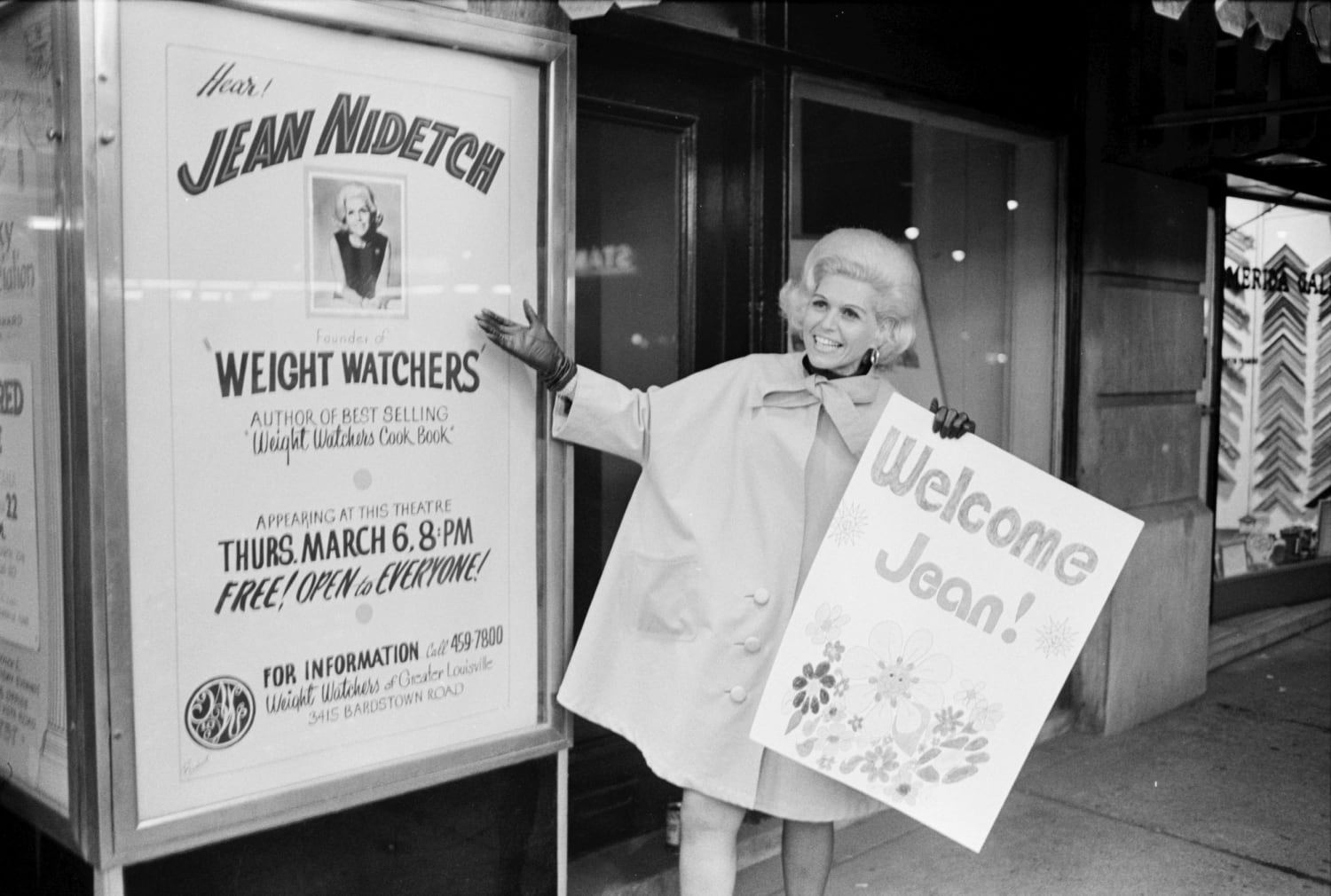
I just read in the newspaper that Jean Nidetch has died at the ripe old age of 91. Don't know who Jean is? Read on, and I'll tell you a story...

Who was Jean?
Jean Nidetch was an unhappy Long Island housewife who was tired of being fat. She had struggled with her weight all her life and was ready to make a change. She consulted her doctor on how to lose weight. He gave her a particular diet and told her to follow it to the letter. Apparently it involved eating liver, which Jean said she didn't like. He told her to 'eat it anyway.'

Jean followed the fairly draconian diet and lost twenty pounds, but found her motivation flagging. So she invited her friends and neighbors into her living room every Saturday morning for weekly weigh-ins, "empathy, rapport and mutual understanding." The group soon outgrew Jean's living room and mushroomed beyond her wildest dreams.
Image: nbcnews.com

Jean and her little group became what we know as Weight Watchers, a weight-loss business that is a household name around the world. (By the way, her maiden name was Slutsky. Can you imagine? I would have gotten married in a New York minute to have gotten rid of that one.)

What's interesting about old school Weight Watchers is that it wasn't about the diet--it was the support of meeting together with others. Weight Watchers' actual eating recommendations have shifted and morphed over the years. The secret of Weight Watchers' initial success is the accountability their system provided. There are WW locations all over the world, and people still go to weekly meetings despite the fact that I'm told they are about as dull as dry toast. Toast that will cost you points, by the way.

How It Works Now
Weight Watchers has changed a lot over the years. It's no longer just about meeting together. It now sells a wide variety of frozen and packaged frankenfood. There is also an online version that people can do on their own.

The modern incarnation of WW is basic calorie counting. They don't specifically count calories--they count 'points,' and each point corresponds to a certain number of calories. I think it's something like 50 calories per point. You are given an allotment of points each day, and once you've exceeded your points, you can't eat anything other than points-free foods, like vegetables. You can eat anything you want, but you have to stay within your points. You figure out pretty quickly not to spend your points frivolously so you don't have to munch on celery for dinner.

Many people have successfully lost weight on this plan, but like most other diets, many of them also gain it back. In fact, even after her great success, with both weight loss and a business that made her a millionaire, Jean continued to struggle with weight for the rest of her life. According to her Wall Street Journal obituary, "Her philosophy on weight loss was that it required constant maintenance. Weight Watchers members were taught to weigh in once a week and stay within two pounds of their goals."

Honestly, I have mixed feelings about Weight Watchers.
I did the online version after I had the Darling Son #2. Life was crazy at that time and I'm an uptight, type-A personality. I needed some accountability to get back on track after the blissful flow of meals from the church ladies stopped. I came within a few pounds of my pre-kids weight and couldn't get any lower. I got frustrated and then just figured that's where my body wanted to be and made my peace with it.

I'm going to talk more about 'goal weight' in another post, but I was initially pretty positive about Weight Watchers. I liked that it didn't put a lot of restriction on what you could eat, instead they just gave you a guideline and had you figure it out. It did give you a sense of ownership about your choices, rather than an 'eat this, not that' kind of guideline.

But the more I read and learn, the more inclined I am to dislike the focus on the scale and the calorie-counting strategy. All calories are not created equal, and it simply doesn't seem to work for people long-term. WW has a very high rate of weight regain--and so does pretty much every other diet brand out there. And really, I think what we weigh is not the most important health indicator.

The restriction of calorie counting is just not sustainable. Most people will lose weight on pretty much any restrictive diet. The hard part is keeping it off.  Cynics like to point out that WW really profits from those who regain and re-enroll over and over and over. Regain just seems to be part and parcel of dieting. One reason for this is that....

Dieting is Stressful
Researcher Janet Tomiyama from the University of California at Los Angeles conducted a study on stress and dieting. According to the book Secrets from the Eating Lab by Traci Mann, Tomiyama divided dieters in different groups. Some were required to simply track their calories, others had to both track and restrict calories, and some just restricted and did not track their eating (these participants were given pre-packaged meals to ensure they consumed no more than their allotted 1,200 calories per day. Yikes--that's not a lot.)

Then Tomiyama tested the dieters' cortisol levels. Cortisol is the stress hormone that we have talked about before. Producing excess cortisol can lead to fat gain, especially in the middle where too much adipose tissue is particularly problematic from a health perspective.

Tomiyama found that the dieters all had elevated cortisol levels. The simple act of dieting had produced a stress response in their bodies. As Mann writes, "It's not just that people should avoid stress while dieting. It's that stress cannot be avoided when you are dieting, because dieting itself causes stress."

I suppose stress is only one part of why restrictive diets fail, but I can help but love what Weight Watchers was all about in the beginning. It was simply getting people together. Get them face to face, build community, and let them support each other.

To keep up with the times, WW also offers an online system. You don't have to go to boring meetings, you just track your eating online. As convenient as the online version is, it doesn't replace the warm fuzziness (or, for that matter, the accountability potential) of real, live, standing-right-in-front-of-you people.

I can't see how anytime a group of neighbors getting together weekly to laugh, cry and high-five each other wouldn't be a good thing. I would have loved to have been in Jean Nidetch's living room meetings all those years ago. Jean was a stitch. (I suppose you'd have to develop a sense of humor if you grew up with a name like 'Slutsky.') Laughter and friends are good for both body and soul.

Sunday, April 26, 2015

Bottoms Up! If Barre Classes Were Drinks

Barre studios have become *quite* prolific. So many have been opening in my area and I've checked out a few on my travels. I'm delighted to see barre really catching on nationally and globally. While I have my favorites, I find what works for one person might not work for another. We all have our preferences and priorities, and I think there is probably a barre for everyone.
Image: pageresource.com

Before I start, a few disclaimers: this is primarily based on live studio classes I've attended. I'm also mentioning online/DVD offerings. I've taken a lot of classes at some studios, and just a few at others.

And so, in no particular order, here's the barre mom's definitive guide:


A fine, rich cabernet sauvignon served in a beautifully appointed bar with a very attentive bartender making certain you are swirling your glass with just the right turn of the wrist and consuming it in the most effective manner.
Image: foodnetwork.com

As I mentioned in my review, TBM instructors are top-notch and very attentive. They will make sure you are getting the most out of your trip to the barre. This is very important to me and it's the main reason TBM is one of my top picks.

The Bar Method has been around for a long time, but growth has been at a measured pace, largely I suspect because of the long training period required of instructors. They're big on quality control. TBM offers several DVDs and has a large and growing library of online workouts with a variety of subscription options. I'd say the online workouts are on par with classes in terms of difficulty. I don't do the online workouts, however. I'm into TBM for the live instruction. It's not the cheapest workout around, but you get what you pay for. I give TBM an A for accessibility.

You might like Bar Method if: 

  • You prize really great, personalized instruction. They've got your back. Trust me.


  • You're a newbie. Since the workout tends to be slower-paced and ultra form-focused, it's great for beginners.


  • You're more experienced and, consequently, you're not getting a whole lot of love at other studios. Instructors naturally focus much of their attention on students newer to barre, and that's totally understandable. Making sure the newer students have a sound grasp on good form is important. But more experienced students need some extra challenge to progress, too. I find TBM to be great in this respect.

You might not like TBM if:

  • You like to fly under the radar. It's standard practice to call out form corrections at The Bar Method. I actually appreciate this because it means we can all benefit from one another, but I know some people don't like this. One person who's done TBM in another state told me she cringed out of fear that they'd call her out. If you like private correction, or to walk in and walk out without being noticed, TBM might not be the be the barre for you.


  • You like a lot of variety. Bar Method classes do tend to be a little same-same. You'll see certain exercises quite frequently--some every class. 


  • You're looking for some cardio. Bar Method classes are strictly for 'toning.'(I hate that word, but that's for another post.) Stretches tend to be brisk and there is little heart-rate elevation going on here. There is a 'Bar Move' class offered at some locations, but it hasn't come to my local yet. Apparently the moves are sequenced to give a little cardio boost. I'll try it one of these days and let you know what I think.

Image: physique57.com
A mojito, made with the best, most expensive rum, and depending on who is teaching, you might find an umbrella in that drink.
Image: dreamstime.com

P57 is very fast-paced. The tempo definitely brings the challenge level up a few notches. Instructors are uber-engaging and sometimes downright entertaining. P57 doesn't have a lot of studios (only in NYC, The Hamptons, LA., Dubai and now Bangkok), but they have DVDs and super pricey online workouts.

You might like P57 if:

  • You find the average barre workout too slow or boring and you like to get some serious cardio/sweating along with your strength training. You will sweat at Physique. If you're not, you're either not a sweat-er, or you're not doing it right.


  • You're more advanced and want some killer class options. Yes, Physique has options, which is so nice. In addition to the signature class (which comes in beginner, mixed, intermediate and advanced), there is pilates-inspired Mat, more advanced Formula 57 and a variety of special workshops and themed classes. 


  • You like a high fun factor in your workouts. Oh my, Physique is so fun! I mean, fun in a very challenging sort of way. Most of the instructors are performers of one sort or another, so they are often quite entertaining. This can also up the challenge level--try to hold a forearm plank while Tanya Becker or Neil Totten are cracking jokes. Whoa.


  • You have plenty of cash and are willing to spend it on your workouts. The price tag is STEEP. More on that later.

You might not like P57 if:

  • You're a beginner and are just learning the ropes. I cut my teeth on P57, so starting here certainly can be done, but even beginner classes at the studios move quickly and it can be tough to keep up. For me, I needed the fast pace to keep me interested, but it's not for everyone.


  • You prefer a more serene, 'meditative' workout. The stretching can be serene, but that's about it. Otherwise it's a pumping beat and go-go-go!


  • You don't live in a studio location, you don't have pots of dough, and you've burned out on their limited selection of DVDs. P57 launched online workouts at a hefty $57 per month. They've only released a handful of streaming workouts for that sky-high price, though there are a few more in the pipeline. As much as I love P57, they get a C for accessibility.

Even with those cons, I can't deny that Physique 57 is still my all-time fave. I've been known to go to rather extreme lengths to take classes there (see here and here.) I *heart* Physique 57. <sigh>

Ok, moving on...

A green smoothie served up in a perfectly aligned glass. Founder Jill Dailey is a kinesiologist who puts a lot of focus on proper alignment and form. You can read my review here.
Image: poweroffood.com

You might like TDM if:

  • You're a west-coaster. TDM is best represented in the wild west of the USA, though they have studios in other cities and even a couple of international locations.


  • You have specific injuries or other need for modifications. I really haven't found other barre brands to be problematic for me, but TDM does pride itself on being uber-safe, and some of the exercises have a slightly different spin. I've only taken a few TDM classes, but typically found the instructors very attentive and knowledgeable.


  • You need childcare. Certain locations offer childcare at some classes. Check your local listings.

You might not like TDM if:

  • You don't live near a studio. They don't offer streaming service and only have two DVDs, which I have heard are effective but pretty boring. I've never tried them, though. For this reason, I'd give TDM a B- for accessibility.


Independent studios 
New England local Smuttynose Pumpkin Ale. 
A micro-brew beer infused with local character.

I don't typically review local, independent studios since my readership is scattered to the four winds, but forsake not your local indie! There are some real gems out there that may not be affiliated with well-known national barre brands. A nice local in my area is Modern Barre in Chestnut Hill, MA. I've also heard good things about the Hilliard Studio Method in Charlotte, NC, but I've never tried it. Someone please do and report back.

DC locals might want to check out Biker Barre on Capitol Hill, which offers spin and barre classes. Again, never been, but I know some regulars and they love it. It's on my list. And really, who can resist such an awesome name?

I also love the DVDs put out by The Ballet Physique in Colorado, though I've never been to a live class. We flew through Denver last year and I confessed to the Darling Husband that I was hoping for an overnight snow delay so I could try a class. (He didn't seem to share my enthusiasm for that plan.) When I travel, I love checking out different studios. Why eat at Chili's when you can try out a local taqueria? (Burr Leonard is cringing at that comparison, but hey, it's better than KFC!)

You might like indie studios if:

  • You crave variety. Independents aren't constrained by the corporate guidelines to which franchised studios have to conform. Instructors often have the freedom to choose different music and try exercises you might not see in other classes. Modern Barre offers different class programming--a high-intensity interval training and a cardio barre class in addition to the signature barre offering. Owner Julia Williamson ends each barre class with a lavender aromatherapy cool down which is delightful--and trademarked. I mean, really trademarked. (Not like I trademark things.)

You might not like independents if:

  • Obviously, the pros and cons of independents are highly variable, but you might find local studios have a sparse schedule compared to the big names. But really, it depends. Again, check your local listings.


Image: exhalespa.com

Fresh and bubbly, and definitely chug-worthy, a trip to Core Fusion will leave you lalala just like champers with a splash of OJ.
Image: blogs.dallasobserver.com

Like Physique 57, Core Fusion caters to a posh crowd. Studios are located in the most upscale neighborhoods of a few major cities, plus some resort locations. In short, where there are rich people. CF was one of the first off-shoots of the original Lotte Berk Method. Like P57's Tanya Becker, CF founders Elisabeth Halfpapp and Fred DeVito worked at LBM's New York City studio before it shut it's doors in 2005. CF classes are offered in conjunction with exhale spas (yes, the 'e' is lower case.)

CF also has a few DVDs. They are very reasonably-priced, though somewhat different and not nearly as challenging, in my opinion, as the live classes. CF gets a B+ for accessibility.

You might like CF if:

  • You're looking for a special occasion barre. It's a treat to go to CF. Studios are very serene. Mother's Day is coming up (*hint hint) and wouldn't it be nice to go downtown to exhale Core Fusion, take a class and get some sort of yummy spa delight afterwards while you watch the kids and do the breakfast dishes? Why yes, Darling Husband, it would. Thank you for asking!


  • You like options. CF offers several regular classes. In addition to traditional barre, there is yoga, Sport and Bootcamp (which you can read about here, here and here.) I've never tried the yoga, because yoga is really not my thing, but the variety is nice.

You might not like CF if:

  • You live in the burbs and/or don't have money falling out of your wallet. CF is sorta fancy. In truth, barre tends to be fancy. This isn't Planet Fitness, but you get what you pay for. I mean, you'll never find free pizza at a barre studio, but facilities at Core Fusion are really lovely and instruction is great.
= Starbucks
Image: starbucks.com

This was probably my easiest drink comparison. Like Starbucks, Pure Barre is pretty much everywhere. It is by far the most prolific barre brand with well over 200 studios throughout the United States and they're expanding into Canada. There is a pretty consistent format to PB workouts and the verbiage is the same no matter where you go. The warm-up is also the same in every studio and changes every three months. Instructors then have a menu of exercises to choose from for the other components of the class. PB studios are independently owned, so classes are not transferable from studio to studio, but if you're travelling and attend another studio, you'll notice it's quite similar to home. (Read my review here.)

PB has a handful of DVDs. Not many, but a few. No streaming yet. DVDs are not available everywhere and are on the higher end of DVD pricing. But there are studios all over the place, so I'd give PB an A for accessibility.

You might like PB if:

  • It's convenient, and it probably is. My local offers many class times throughout the week, and the owner of my local also owns the studio in the neighboring town, so in this case, I can go to either location depending on what best fits my schedule.


  • You like consistency. As mentioned, the format and cueing are pretty much the same wherever you go. They do change up some of the exercises, so you don't get a whole lot of repeat moves, apart from the warm up/arms segment in the beginning.


  • You're looking for friends, not just a workout. This may not be true of all PB locations, but at my local, they really do foster a nice sense of community. They do special challenges and events from time to time, like the Plank Off that I participated in last summer. They have a 'Bring on the Men' event a few times a year, during which women are encouraged to bring husbands, boyfriends, brothers, etc. (I haven't been able to sell this kind of thing to my Darling yet, but you never know.) This might be largely due to my local owner's personality--she's very warm and friendly and very open to feedback. PB can be a nice place to make new friends.

You might not like PB if:

  • You're looking for very attentive, engaging instruction, or advanced options. I've found PB instructors to be kind of hit-or-miss. Some are really on it, while others seem to just roam around the room. Also, the degree of difficulty can vary widely. I've taken some classes that were quite manageable and others that were wicked hard. And since there is only one class type, you don't really know how it's going to be until you're in the middle of it.


  • You're brand new to barre. I've brought a few barre virgins to PB and they've typically found it a little frustrating. Like Starbucks, PB definitely has it's own lingo, so if 'box out your arm on the barre' doesn't mean anything to you, you might find PB frustrating until you learn to speak their language. This can be mitigated by alerting the instructor that you're new. Lots of people got their releves wet at PB, so I'm not saying it's a bad place to start, just not the best, in my opinion.

= a long island iced tea served in a sippy cup.

Image: babygizmo.com

Barre3 is a mix of a lot of different elements--barre, yoga, pilates, compound moves and it really caters to the Mommy crowd. They are expanding their studio business, and they have a very robust online streaming service, as well as DVDs, a print book and a mobile app. Barre3 definitely gets an A+ for accessibility. (Class review here.)

You might like barre3 if:

  • You need childcare. Barre3 offers it for some classes, and may God bless them for it.


  • You're looking for something a little different. This is not your standard barre class. B3 throws a lot of different elements into the mix and can make for a nice change if you need a break from up-an-inch-down-an-inch.


  • You are looking for a cardio component. The compound moves in barre3 definitely get your heart pumping.

You might not like barre3 if:

  • You don't like lots and lots of reps. I only took one class at barre3 so I'm reticent to criticize anything, but there were LOTS of reps and the instructor said that was typical. So, FYI.


  • You're looking for a serene, calming experience. I didn't find barre3 to be serene. But I don't really need that in a workout. Just my bed. I need my bed to be serene.


***********************

So there you go, that's my take on the barre scene. The more I talk to other barre devotees, the more I see that convenience and location are the key factors that drive people's choices. A studio that's affordable and easy to get to is pretty key. Obviously, not all studios can be all things to all people, and working out is something you really need to do a few times a week. So that's a huge consideration. But people like different things. I like it when an instructor is all up in my grill; others find that off-putting. Some are looking for social connection; others just want to get in and get out.

I slogged through a lot of hard classes and, even more importantly, drank A LOT to bring you this in-depth report. It was tough, but I live to serve. Bottoms up!

Tuesday, April 7, 2015

I'll Take the Local: Why Supporting Small Farms Helps Us All

The state of California is in the midst of a terrible drought. Even in a good year, California weather is weird to me as an east coaster. It never rains in the summer. Californians are entirely dependent on winter rain to fill their reservoirs, and this past winter was a very dry one. Governor Jerry Brown has implemented a mandatory water reduction strategy--for the first time ever in the state's history.

Californians are taking short showers, but what does that mean for the rest of us? Higher food prices, apparently. We get an absolutely ridiculous amount of food from California. Something like 80% of the tomatoes Americans eat come from this one state. Yes, the one that's WAY over there. Granted, it's a big state, but still. It's FAR from where I live. I could fly to Reykjavik in less time than it takes me to get to California.

Something's Fishy

It strikes me as insane how much of our food comes from really far away. I recently heard on NPR that the US exports something like 90% of the fish we catch, and we import 80% of the fish we eat. Or maybe it's the reverse--90% import/80% export. I can't remember. Either way, it's INSANE.

And while we're talking crazy, get this: much of the cod fish in local markets is from ICELAND.

WHY???? I live an hour away from a place called CAPE COD. A friend of mine, a Boston local who is one of five children, told me they ate tons of cod when she was growing up because it was local and thus, cheap. Apparently this is no longer the case. We've decided, fuel shortages and all, that we should send our cod to heaven-knows-where and instead ship in cod from a small country 2,500 miles away. At least it's closer than California.

And so, like any good modern American, I shall shake my fist and demand to know,

WHO IS RESPONSIBLE?!

Earl Butz, that's who.
www.laprogressive.com

Butz was Secretary of Agriculture under President Nixon. His task was to lower food prices, which had been rising in recent years. Butz responded with a series of initiatives that favored large farms and punished the small ones. He is famous for telling farmers, 'Get big, or get out.'

The result of these policies was the closure of hundreds (thousands?) of small family farms. We started importing our food from ridiculously far away places. Like California. And Iceland.

About 20 years ago, I visited a college friend at her home in rural Vermont. As we drove around, she pointed out dozens of small dairy farms that had closed. Vermont was once known for it's dairy farms, now it's more famous for leaf-peeping. Butz's policies were devastating for rural agricultural communities that didn't hop onto his 'get big' bandwagon.

The problem with consolidating our food supply as we have is that we are basically up a (dry) creek without a paddle when something like a drought occurs. If we don't nurture our small, local farms, could we end up with something like an Irish potato famine?? Maybe. And good grief, all the fuel we use to ship these tomatoes and cod fish to and fro... it's so inefficient.

Of course, I am not insensitive to the fact that I live in a cold, densely populated area with a relatively short growing season. Late winter and early spring would be pretty lean months if we relied solely on local foods. But if we support our farms, ranches and fishermen, our resources would undoubtedly be more robust. It might still be sparse by March, but by then, the maple sap is flowing freely so we could at least slurp on syrup for a while. Yay!

Local food is fresher and so much yummier than far-away fare. The produce we get from our wonderful CSA, Picadilly Farm in New Hampshire, stays fresh SO MUCH LONGER than anything I buy from the supermarket.

Wow, I'm REALLY getting a lot of use out of the caps lock button today, but buying local just makes sense. We can leave the Icelanders with their cod, and maybe next winter arrange a snow-for-tomatoes exchange with California??

************************

You can find local foods at farmer's markets and some supermarkets, but the best place is directly from the farms. Check out www.eatwild.com  and www.localharvest.org for a list of local farms in your area.